Infographic Response

Response to an Infographic About Coral Bleaching

by Sahir Shahryar

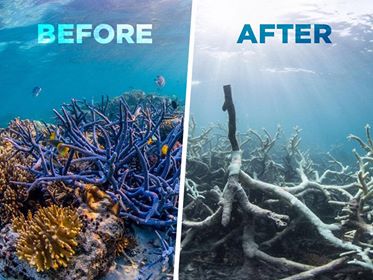
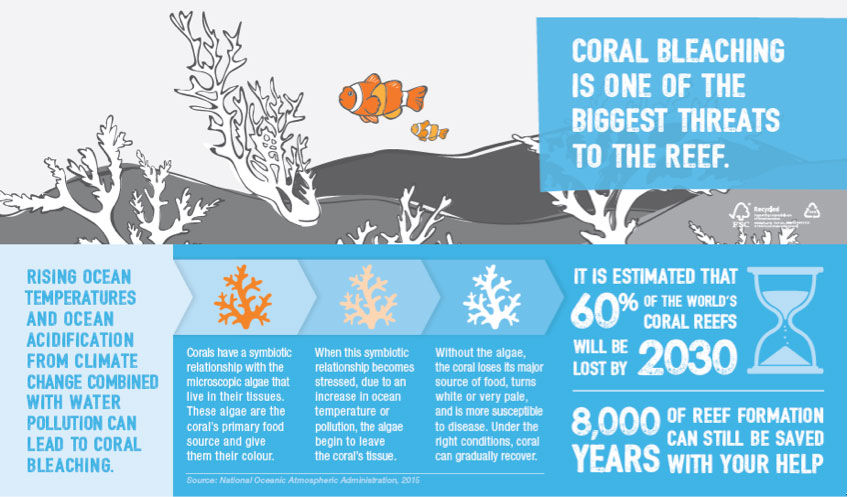
I found this infographic when looking for infographics related to the carbon cycle. It covers coral bleaching, which occurs when the oceans become more acidic as a result of increased carbon dioxide in the atmosphere. The infographic drew my attention immediately with its stark contrast. The grayed-out coral and water really give an idea how bleak a bleached coral reef looks:

The inclusion of clownfish in the ocean scene not only provides a stark color contrast, but may also make a subtle reference to Finding Nemo, a childhood favorite of many young adults today. Although I doubt that the infographic relies on the connection to Nemo to sustain the viewer’s interest, it is a smart visual device to capture the attention of someone who may not be interested otherwise. The use of arrows and bold typography make the infographic easy to follow, and the half-emptied hourglass indicates that “the clock’s ticking” to the viewer. Key figures such as “60%,” “2030,” and “8000 years” are shown in large fonts, making them stand out.

Overall, the infographic evoked feelings of frustration out of me. Seeing the impact that we are having on other life forms when we use fossil fuels makes me upset that there are politicians willing to deliberately look the other way for political gain. I think the author of the infographic wanted viewers to see how fossil fuel usage impacts our environment in more ways than just the obvious.

I think the takeaway from this graphic is that our infographic needs to show the viewer something that they didn’t know about (or hadn’t considered) beforehand. If our infographic can give students a new perspective, then it stands a good chance of convincing them of the benefits of composting — and the need to compost.


Infographic credit: the Forest Stewardship Council (FSC)

Reef comparison image credit: Atoll Volunteers <http://www.atollvolunteers.com/coral-bleaching/>

Group 4 Organisms in Compost

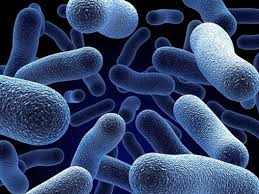
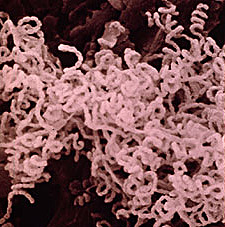
Microorganisms:

The decomposers within the pile that are responsible for changing the chemistry of organic waste materials.

Video on Decomposers!

Aerobic Bacteria: The most important of these decomposers.  Capable of consuming practically anything, they take in Carbon and Nitrogen to grow and reproduce, obtaining energy by oxidizing organic material.  Require specific Oxygen concentrations of 5%, otherwise will become inactive or die, which can slow composition rate over 90%. They are also useful in that they excrete plant nutrients such as Nitrogen, Phosphorus, and Magnesium.
Types:

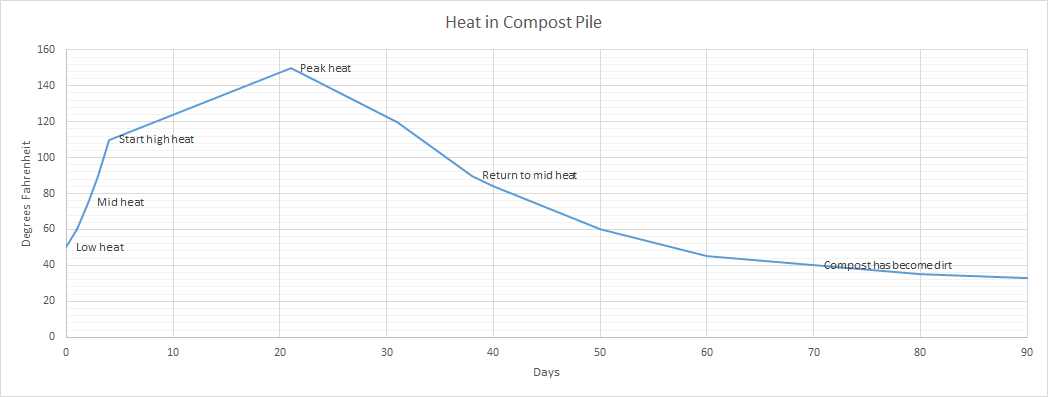
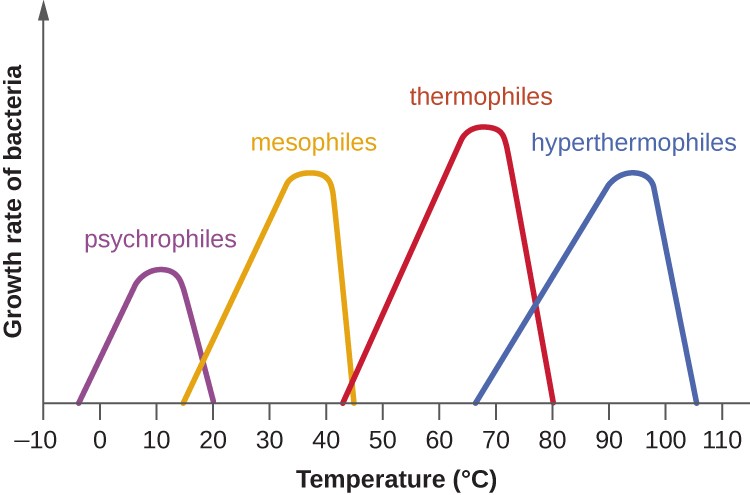
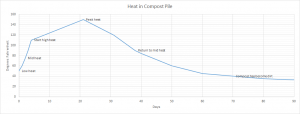
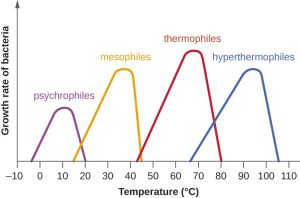
Psychrophilic bacteria: Work in the lowest temperature range, preferred range starting at 55° F but will work if the initial pile temperature is less than 70º F.  Produce the least heat of any bacteria, but produce just enough to warm the pile enough for the next step of the composition process to occur, the introduction of:

Mesophilic bacteria: These bacteria rapidly decompose organic matter, producing acids, carbon dioxide and heat in the process. They can work within the temperature range between 70º to 100º F, but at the height of this they start dying off, or moving to the outermost edges of the pile which have not reached such high temperatures.  Their exodus leaves room for:

Thermophilic bacteria:  These thrive at the highest temperatures, working from 100 to 160º F.  Their process moves fast, only sustainable for 3-5 days unless new material is constantly being added to the pile as they consume organic material quickly.  Once the pile begins to cool once again, the Mesophilic bacteria take over once more, quickly consuming any remaining organic material with the help of other surviving organisms.
Anaerobic Bacteria: Take over when Aerobic Bacteria are inactive, producing useless organic acids and ammonia-like substances that contain unavailable nutrients and can even be toxic to plants.  These bacteria are responsible for the bad smells produced by compost in their production of hydrogen sulfide, cadaverine, and putrescine.

Actinomycetes: A higher-form bacteria similar in structure to Fungi or Molds.  They appear greyish, and work in the medium heat of the pile, much similar to the Mesophilic bacteria.  These are responsible for breaking down the most resilient materials within the pile, like lignin, cellulose, starches, and proteins. As they break down organic matter they liberate carbon, nitrogen, and ammonia, making nutrients available within the created dirt.  These bacteria are what produce the earthy, pleasant smell of compost, and become more obvious as the composting process goes on, forming large clusters within the later stages.

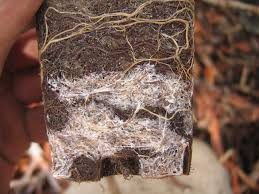
Fungi: Primitive plants, lacking a photosynthetic pigment, that can be single or multicellular creatures.  Prefer cooler temperatures, and usually only take part in the process at the very end, breaking down cellulose and lignin, after faster acting bacteria have made inroads on them.
      

Macroorganisms:

Responsible for actually breaking down various organic items in compost physically by chewing, digesting, etc. in the latter stages of a composting cycle. These organisms’ excrement is further broken down by microorganisms and some of these serve as a food source for higher level consumers in this food chain.

Consumers: The macroorganisms in a compost pile can be separated into 3 different groups: 1st level consumers, 2nd level consumers, and 3rd level consumers.

-1st level consumers become food for the 2nd level consumers.

-2nd level consumers become food for 3rd level consumers.

This creates a complex food chain inside the compost pile that ultimately helps to further the process of decomposition.

Ants: These feed on a variety of materials including seeds, fungi, and other insects. Ants help create a more rich environment in the compost by moving around minerals like Phosphorus and Potassium.

Millipedes: Worm-like segmented insects that have many walking legs. These macroorganisms mainly help in the vegetation decomposition by feeding on organic greens.

Centipedes: Worm-like segmented insects with less walking legs that appear flat. Most feed on other consumers like spiders and insects.

Sow Bugs: Have a characteristic flat, oval body with 20 legs. They feed primarily decaying vegetation like rotting wood.

Springtails: These insects are small and vary in color from white to black. Most notably they have an incredible ability to jump. Most springtails prefer to feed on fungi and mold.

Earthworms are secondary consumers that are considered later compost immigrants and feed on the remains of earlier inhabitants in the compost.  Earthworms can be used to recycle earlier organic materials that they then convert to vermicompost, a rich compost substance.

Beetles are tertiary consumers in compost. The most common beetles in compost are the rove beetle, ground beetle and feather-winged beetle.  The feather-winged beetle eat fungi spores while most beetles, including the rove, eat spiders, mites, and other beetles.

Spiders are prey for the tertiary predators (ants, centipedes, beetles). Spiders are some of the many physical decomposers that tear up organic material into even smaller pieces.  As we are all accustomed to, spiders have eight legs and generally feed on insects and flies. They can also help control garden pest in a compost garden.

Flies are secondary consumers and the prey for centipedes and spiders.  Flies are ideal for transporting bacteria to all parts of the compost in the early cycles of your compost.

Snails and slugs are secondary consumers and food for centipedes.  Snails have a shell on them while, slugs are basically the same, except shelless.  Both are mollusks that eat organic material and help break down material in your compost, but if they reach the garden they can do great damage to crops.

Soil flatworms are small flattened carnivores that typically live in films of water inside the compost.


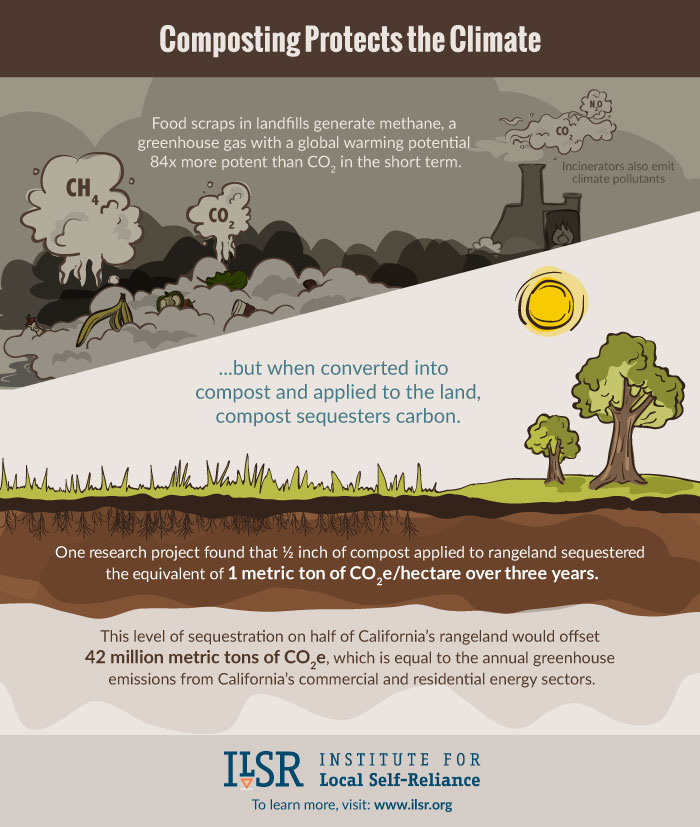
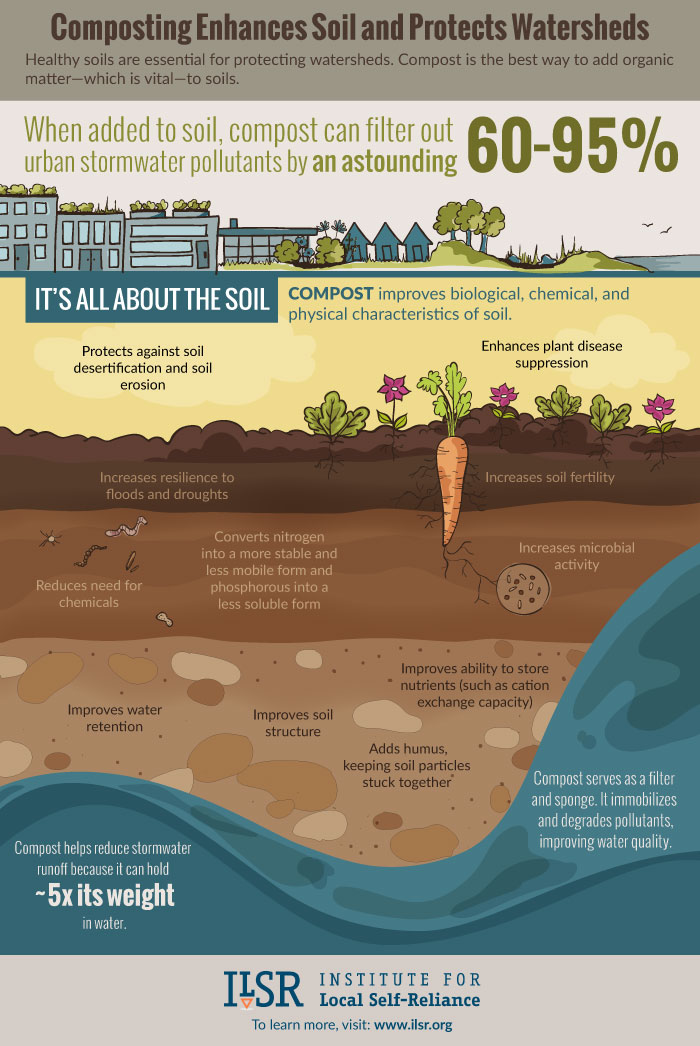
Inforgraphic- Kunho

What

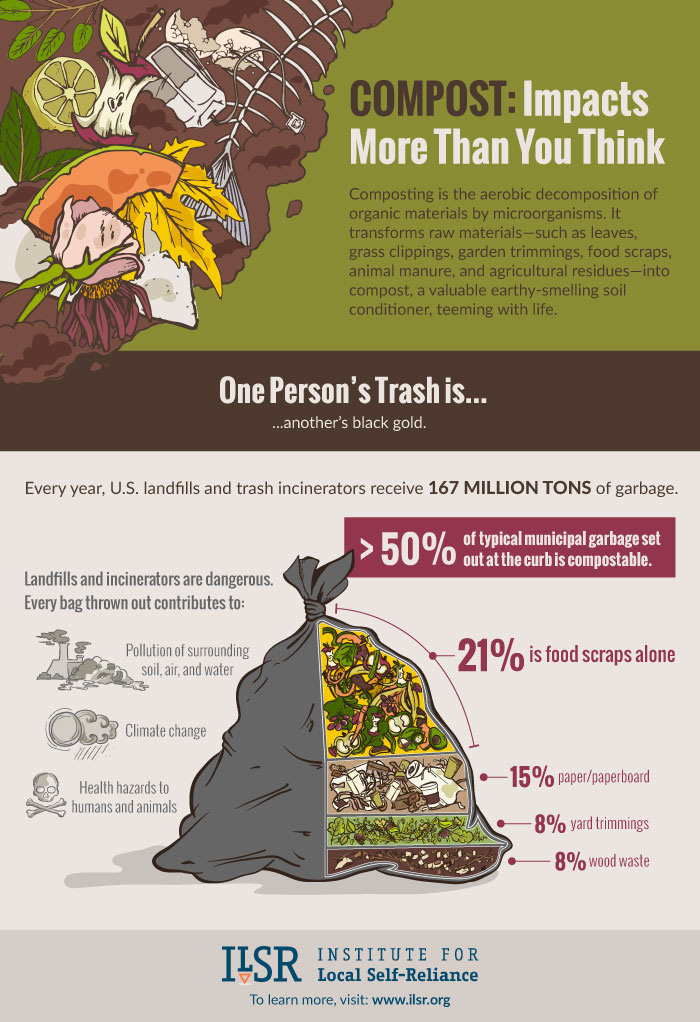
  • This infographic is intellectually stimulating because it provides several facts and statistics that support its message that composting is important.
  • The information on the infographic stays relevant to the reader because everyone throws away trash and food scraps that could potentially be used for composting.
  • The way the information is portrayed in the infographic is also very creative. It makes use of a garbage bag and divides it up into the percentages that shows how much of the garbage thrown out every day is compostable.

Gut

  • The graphic did make me feel like the community and people in general weren’t doing enough to compost. However, I also felt optimistic because infographics like these will eventually help raise awareness and increase the rate of composting.

So What

  • I hadn’t thought of how much of the garbage we throw out every day is able to be composted. The infographic really does a great job in showing just really how much wasted potential that is.
  • The organization, Institute for Local Self-Reliance, gathered its data from many different sources such as the EPA.

Now What

  • I don’t think that many students have considered how much of an impact they could make on the environment if they began to compost half of the things they would have just mindlessly thrown in the trash.
  • I think that many students haven’t thought of this because they weren’t aware and didn’t know.
  • I think that an infographic that both informs and inspires/motivates students to make small changes in their lives to contribute to a big change on the environment is necessary!

comments from group four to group five

What NOT to Include in Compost (Allaina Siler, Ku Kim, Delaney Williams)

What you CAN’T compost:

  • Meat (and anything that came in contact with meat),  dairy and bones
    • Animal products such as meat have the potential for carrying diseases, and they could potentially attract rodents.
  • Fats and oils (such as peanut oil, canola/ vegetable oil, etc)
    • The oils may attract pests and rodents
  • Walnuts
    • Contain juglone, a compound toxic to some plants
  • Eggs and dairy products
    • Attract pests
  • Cigarette butts
    • Made of plastic
  • Store bought shampoos/soaps
    • Chemicals and dyes contaminate the compost
  • Baked goods
    • Due to their oils that would attract pests such as rodents and ants
  • Human and animal Feces
    • Due to harmful bacteria and the possibility of parasites and infectious diseases
  • Specific types of water:
    • Soapy water from baths/showers or washing cars
    • Dishwater from washing up
    • Washing machine waste water
    • Waste water from the toilet
    • Flood water
    • Water contaminated with bleach or other cleaning agents
    • Water contaminated with petrol or oils
  • Rice
    • Attracts unwanted bacteria and pests
  • Anything made of inorganic material: polyester, rubber, acrylic, plastic
    • Take a very long time to compost
  • Bits of clothing
    • They contain dyes and chemicals that would be harmful
  • Baked beans
    • Worms which might help with decomposition don’t like baked beans, they shouldn’t be included
  • Specific types of paper
    • Glossy or coated paper (that are treated with chemicals)
    • Colored paper
  • Dryer lint and contents from vacuum cleaner
    • Contaminate compost
  • Personal hygiene products: tampons, feminine napkins
    • Potential health risk with bacteria
  • Tea and Coffee Bags
    • While tea leaves and ground coffee can be composted, their bags shouldn’t be in the pile, as they have harmful chemicals and are difficult to decompose.

_________________________

Comments:

The main message was clearly what could not be composted

A little more variance in the bullets would make the post more easily readable – I can see that this was done in the editing screen but does not show up in the post itself.  Maybe instead the main points should be bolded, or not bulleted at all, with the minor points bulleted, or switched to the numerical outline-style bullets

The purpose is to explain to prospective composters what of their detritus must be disposed of in ways other than by composting

There doesn’t seem to be anything that needs cutting, other than perhaps moving the authors’ names to somewhere else on the page rather than in massive font that sits in the drop down menu as well as the post

Title – Improper Compostents? (components/compostents) or maybe Don’t Soil Your Soil


Group 6 to Group 4

Organisms in Compost

Microorganisms:

The decomposers within the pile that are responsible for changing the chemistry of organic waste materials.

Video on Decomposers!

Aerobic Bacteria: The most important of these decomposers.  Capable of consuming practically anything, they take in Carbon and Nitrogen to grow and reproduce, obtaining energy by oxidizing organic material.  Require specific Oxygen concentrations of 5%, otherwise will become inactive or die, which can slow composition rate over 90%. They are also useful in that they excrete plant nutrients such as Nitrogen, Phosphorus, and Magnesium.

Types:

Psychrophilic bacteria: Work in the lowest temperature range, preferred range starting at 55° F but will work if the initial pile temperature is less than 70º F.  Produce the least heat of any bacteria, but produce just enough to warm the pile enough for the next step of the composition process to occur, the introduction of:

Mesophilic bacteria: These bacteria rapidly decompose organic matter, producing acids, carbon dioxide and heat in the process. They can work within the temperature range between 70º to 100º F, but at the height of this they start dying off, or moving to the outermost edges of the pile which have not reached such high temperatures.  Their exodus leaves room for:

Thermophilic bacteria:  These thrive at the highest temperatures, working from 100 to 160º F.  Their process moves fast, only sustainable for 3-5 days unless new material is constantly being added to the pile as they consume organic material quickly.  Once the pile begins to cool once again, the Mesophilic bacteria take over once more, quickly consuming any remaining organic material with the help of other surviving organisms.

Anaerobic Bacteria: Take over when Aerobic Bacteria are inactive, producing useless organic acids and ammonia-like substances that contain unavailable nutrients and can even be toxic to plants.  These bacteria are responsible for the bad smells produced by compost in their production of hydrogen sulfide, cadaverine, and putrescine.

Actinomycetes: A higher-form bacteria similar in structure to Fungi or Molds.  They appear greyish, and work in the medium heat of the pile, much similar to the Mesophilic bacteria.  These are responsible for breaking down the most resilient materials within the pile, like lignin, cellulose, starches, and proteins. As they break down organic matter they liberate carbon, nitrogen, and ammonia, making nutrients available within the created dirt.  These bacteria are what produce the earthy, pleasant smell of compost, and become more obvious as the composting process goes on, forming large clusters within the later stages.

Fungi: Primitive plants, lacking a photosynthetic pigment, that can be single or multicellular creatures.  Prefer cooler temperatures, and usually only take part in the process at the very end, breaking down cellulose and lignin, after faster acting bacteria have made inroads on them.
      

Macroorganisms:

Responsible for actually breaking down various organic items in compost physically by chewing, digesting, etc. in the latter stages of a composting cycle. These organisms’ excrement is further broken down by microorganisms and some of these serve as a food source for higher level consumers in this food chain.

Consumers: The macroorganisms in a compost pile can be separated into 3 different groups: 1st level consumers, 2nd level consumers, and 3rd level consumers.

-1st level consumers become food for the 2nd level consumers.

-2nd level consumers become food for 3rd level consumers.

This creates a complex food chain inside the compost pile that ultimately helps to further the process of decomposition.

Ants: These feed on a variety of materials including seeds, fungi, and other insects. Ants help create a more rich environment in the compost by moving around minerals like Phosphorus and Potassium.

Millipedes: Worm-like segmented insects that have many walking legs. These macroorganisms mainly help in the vegetation decomposition by feeding on organic greens.

Centipedes: Worm-like segmented insects with less walking legs that appear flat. Most feed on other consumers like spiders and insects.

Sow Bugs: Have a characteristic flat, oval body with 20 legs. They feed primarily decaying vegetation like rotting wood.

Springtails: These insects are small and vary in color from white to black. Most notably they have an incredible ability to jump. Most springtails prefer to feed on fungi and mold.

Earthworms are secondary consumers that are considered later compost immigrants and feed on the remains of earlier inhabitants in the compost.  Earthworms can be used to recycle earlier organic materials that they then convert to vermicompost, a rich compost substance.

Beetles are tertiary consumers in compost. The most common beetles in compost are the rove beetle, ground beetle and feather-winged beetle.  The feather-winged beetle eat fungi spores while most beetles, including the rove, eat spiders, mites, and other beetles.

Spiders are prey for the tertiary predators (ants, centipedes, beetles). Spiders are some of the many physical decomposers that tear up organic material into even smaller pieces.  As we are all accustomed to, spiders have eight legs and generally feed on insects and flies. They can also help control garden pest in a compost garden.

Flies are secondary consumers and the prey for centipedes and spiders.  Flies are ideal for transporting bacteria to all parts of the compost in the early cycles of your compost.

Snails and slugs are secondary consumers and food for centipedes.  Snails have a shell on them while, slugs are basically the same, except shelless.  Both are mollusks that eat organic material and help break down material in your compost, but if they reach the garden they can do great damage to crops.

Soil flatworms are small flattened carnivores that typically live in films of water inside the compost.


Here’s a fun game you can play to learn about composting: FUN GAME!!!!


COMMENTS

Lots of great information here! The infographics were a great addition that really helped with understanding. Maybe pick out some of the most essential information since there’s just so much. This could help University students interested in learning about composting be less overwhelmed.
Saving the World (Group 7) COMMENT AND GIVE US FEEDBACK @Group1 :)

Michael, Sarah Kate, Kunho, Sahir

Is Composting the Solution for Climate Change?

  • Maximizes ability for plants to covert carbon dioxide into usable carbon in the plant and soil
    • Helps climate that is being thrown off from burning fossil fuels
  • Composting improves soil quality/structure
    • This helps the soil retain more water and avoid erosion and stormwater runoff
    • Soil becomes a filter/sponge that immobilizes and degrades
  • Increases soil fertility
    • Increases microbial activity – better crops
  • Reduces need for chemicals
    • Reduction of harmful pesticides, some of which impact the ozone
    • Less pressure placed on improving fertilizers
  • Creates jobs and stimulates the economy
    • Manufacturing compost requires labor
    • Can buy/sell compost
  • Composting gives purpose to food waste
    • Instead of food scraps rotting in land fills and producing methane (which contributes to global warming), when composted, the nutrients in food scraps can be put back into the environment
  • Reduces amount of trash in land fills

benefits of composting – group 1

Taylor, John, Lauren, Vivian

statistics:

  • Composting can reduce household waste by 30%
  • Composting can reduce soil fertilization costs by 50%
  • A small American city of 100k people creates enough waste in one year to equal three times the weight of the Statue of Liberty, roughly the equivalent of $165 billion of wasted food every year in the US.
  • Over 60% of what we put in our what we put in our landfills is organic waste
  • Composting prevented the release of 183 million tons of carbon dioxide into the air– that’s equivalent to 34 million cars taken off the road for one year
  • Over ⅓ of landfill waste is compostable

benefitting water:

  • Compost helps soak up water, slowly releasing it to plants. With enough compost in your soil, you won’t have to water as much. Also, compost applied thickly as a top dressing has some of the benefits of mulching. It will keep water from evaporating from deeper levels.
  • Composting increases the volume of water by 3 quarts per cubic foot of soil resulting in less frequent watering (this could potentially help agricultural areas experiencing drought ie California)
  • Compost helps to improve water retention in soil

benefiting fertilization:

  • Composting is a natural alternative to chemical fertilizer
  • Composting can reduce soil fertilization costs by 50%
  • Cons of Fertilization and why we should use composting as an alternative
    • Require multiple applications in one season
    • Temporary solution, doesn’t add nutrients to soil
    • Pollutes stormwater (more water treatment = increase in water cost)

benefitting the environment (CO2 Emissions):

  • Reduces methane emissions from landfills and lowers your carbon footprint
  • Food scraps in landfills generate methane, a greenhouse gas with global warming potential 84x more potent than CO2 in the short term
  • ½ inch of compost applied to rangeland sequestered the equivalent of 1 metric ton of Co2e/hectare over three years
  • Composting prevented the release of 183 million tons of carbon dioxide into the air- that’s equivalent to 34 million cars taken off the road for one year

benefitting human health:

  • Composting can have an effect on physical health as well — we can ingest molecules of harmful substances such as fertilizer and landfill leachate
  • Composting can make us more aware of what we eat and how that food is produces
  • source: Davies, S. (2011). Composting Inside and Out : The Comprehensive Guide to Reusing Trash, Saving Money and Enjoying the Benefits of Organic Gardening. Cincinnati, Ohio: Krause Publications.

benefiting agriculture:

  • Composting promotes higher crop yields
  • Compost can be used to remediate soils contaminated by hazardous waste in a cost effective manner
  • On a per-ton basis, making compost alone employs 2x more workers than landfills and 4x more than incinerators
  • One study demonstrated in over five years, a natural (compost) turf program resulted in 25% savings when compared to a chemical one (SOURCE: GrassRootsInfo.org)

Group 5 to Group 6

Composting Options for City Dwellers

Composting Options for City Dwellers


  • Pick Up
    • Let Us Compost
    • http://www.letuscompost.com/
      • Athens Based, picks up in Athens and Atlanta
      • Costs for residential composting from LET US COMPOST
        • $15/month
      • Included
        • A kitchen bin for scraps
        • Rolling cart to take it to road and hold full bags
        • New bags weekly
        • Weekly Pickup of scraps
      • Commercial composting with Let Us Compost
        • $35/week
        • Collect scraps 5x a day
      • Accepted: “Meat, bones, coffee, vegetables, fruit, leftovers, dairy and BPI certified wares”
      • All scraps collected taken to Classic City Composting


Conclusions:

  • Large-scale composting operations, comparable to landfill garbage disposal, are far too costly to implement
    • Exceptions are in the North-east where regular land disposal is increasingly expensive
  • Important to consider legislative changes on the production side, forcing corporations to create products that are more easily recyclable
    • Put tax burden of recycling on corps, as there is no existing infrastructure to mindfully dispose of certain materials (see plastics, etc)
    • Or force corps to put in place easier access to plastic recycling
    • Maybe ask Roosevelt about creating state-wide/national reform
  • Large scale vermiculture is a serious system to be considered, as it efficiently produces compost (time wise)
    • A very in depth process, requiring constant attention
  • Incineration/Gasification might be a more lucrative/useful waste management alternative

Group Five to Group Four

Organisms in Compost

Microorganisms:

The decomposers within the pile that are responsible for changing the chemistry of organic waste materials.

Video on Decomposers!

Aerobic Bacteria: The most important of these decomposers.  Capable of consuming practically anything, they take in Carbon and Nitrogen to grow and reproduce, obtaining energy by oxidizing organic material.  Require specific Oxygen concentrations of 5%, otherwise will become inactive or die, which can slow composition rate over 90%. They are also useful in that they excrete plant nutrients such as Nitrogen, Phosphorus, and Magnesium.

Types:

Psychrophilic bacteria: Work in the lowest temperature range, preferred range starting at 55° F but will work if the initial pile temperature is less than 70º F.  Produce the least heat of any bacteria, but produce just enough to warm the pile enough for the next step of the composition process to occur, the introduction of:

Mesophilic bacteria: These bacteria rapidly decompose organic matter, producing acids, carbon dioxide and heat in the process. They can work within the temperature range between 70º to 100º F, but at the height of this they start dying off, or moving to the outermost edges of the pile which have not reached such high temperatures.  Their exodus leaves room for:

Thermophilic bacteria:  These thrive at the highest temperatures, working from 100 to 160º F.  Their process moves fast, only sustainable for 3-5 days unless new material is constantly being added to the pile as they consume organic material quickly.  Once the pile begins to cool once again, the Mesophilic bacteria take over once more, quickly consuming any remaining organic material with the help of other surviving organisms.

Anaerobic Bacteria: Take over when Aerobic Bacteria are inactive, producing useless organic acids and ammonia-like substances that contain unavailable nutrients and can even be toxic to plants.  These bacteria are responsible for the bad smells produced by compost in their production of hydrogen sulfide, cadaverine, and putrescine.

Actinomycetes: A higher-form bacteria similar in structure to Fungi or Molds.  They appear greyish, and work in the medium heat of the pile, much similar to the Mesophilic bacteria.  These are responsible for breaking down the most resilient materials within the pile, like lignin, cellulose, starches, and proteins. As they break down organic matter they liberate carbon, nitrogen, and ammonia, making nutrients available within the created dirt.  These bacteria are what produce the earthy, pleasant smell of compost, and become more obvious as the composting process goes on, forming large clusters within the later stages.

Fungi: Primitive plants, lacking a photosynthetic pigment, that can be single or multicellular creatures.  Prefer cooler temperatures, and usually only take part in the process at the very end, breaking down cellulose and lignin, after faster acting bacteria have made inroads on them.


Macroorganisms:

Responsible for actually breaking down various organic items in compost physically by chewing, digesting, etc. in the latter stages of a composting cycle. These organisms’ excrement is further broken down by microorganisms and some of these serve as a food source for higher level consumers in this food chain.

Consumers: The macroorganisms in a compost pile can be separated into 3 different groups: 1st level consumers, 2nd level consumers, and 3rd level consumers.

-1st level consumers become food for the 2nd level consumers.

-2nd level consumers become food for 3rd level consumers.

This creates a complex food chain inside the compost pile that ultimately helps to further the process of decomposition.

Ants: These feed on a variety of materials including seeds, fungi, and other insects. Ants help create a more rich environment in the compost by moving around minerals like Phosphorus and Potassium.

Millipedes: Worm-like segmented insects that have many walking legs. These macroorganisms mainly help in the vegetation decomposition by feeding on organic greens.

Centipedes: Worm-like segmented insects with less walking legs that appear flat. Most feed on other consumers like spiders and insects.

Sow Bugs: Have a characteristic flat, oval body with 20 legs. They feed primarily decaying vegetation like rotting wood.

Springtails: These insects are small and vary in color from white to black. Most notably they have an incredible ability to jump. Most springtails prefer to feed on fungi and mold.

Earthworms are secondary consumers that are considered later compost immigrants and feed on the remains of earlier inhabitants in the compost.  Earthworms can be used to recycle earlier organic materials that they then convert to vermicompost, a rich compost substance.

Beetles are tertiary consumers in compost. The most common beetles in compost are the rove beetle, ground beetle and feather-winged beetle.  The feather-winged beetle eat fungi spores while most beetles, including the rove, eat spiders, mites, and other beetles.

Spiders are prey for the tertiary predators (ants, centipedes, beetles). Spiders are some of the many physical decomposers that tear up organic material into even smaller pieces.  As we are all accustomed to, spiders have eight legs and generally feed on insects and flies. They can also help control garden pest in a compost garden.

Flies are secondary consumers and the prey for centipedes and spiders.  Flies are ideal for transporting bacteria to all parts of the compost in the early cycles of your compost.

Snails and slugs are secondary consumers and food for centipedes.  Snails have a shell on them while, slugs are basically the same, except shelless.  Both are mollusks that eat organic material and help break down material in your compost, but if they reach the garden they can do great damage to crops.

Soil flatworms are small flattened carnivores that typically live in films of water inside the compost.


Comments from Group 6 to Group 5

What you CAN’T compost:

  • Meat (and anything that came in contact with meat),  dairy and bones
    • Animal products such as meat have the potential for carrying diseases, and they could potentially attract rodents.   
  • Fats and oils (such as peanut oil, canola/ vegetable oil, etc)
    • The oils may attract pests and rodents
  • Walnuts
    • Contain juglone, a compound toxic to some plants
  • Eggs and dairy products
    • Attract pests
  • Cigarette butts
    • Made of plastic
  • Store bought shampoos/soaps
    • Chemicals and dyes contaminate the compost
  • Baked goods
    • Due to their oils that would attract pests such as rodents and ants
  • Human and animal Feces
    • Due to harmful bacteria and the possibility of parasites and infectious diseases
  • Specific types of water:
    • Soapy water from baths/showers or washing cars
    • Dishwater from washing up
    • Washing machine waste water
    • Waste water from the toilet
    • Flood water
    • Water contaminated with bleach or other cleaning agents
    • Water contaminated with petrol or oils
  • Rice
    • Attracts unwanted bacteria and pests
  • Anything made of inorganic material: polyester, rubber, acrylic, plastic
    • Take a very long time to compost
  • Bits of clothing
    • They contain dyes and chemicals that would be harmful
  • Baked beans
    • Worms which might help with decomposition don’t like baked beans, they shouldn’t be included
  • Specific types of paper
    • Glossy or coated paper (that are treated with chemicals)
    • Colored paper
  • Dryer lint and contents from vacuum cleaner
    • Contaminate compost
  • Personal hygiene products: tampons, feminine napkins
    • Potential health risk with bacteria
  • Tea and Coffee Bags
    • While tea leaves and ground coffee can be composted, their bags shouldn’t be in the pile, as they have harmful chemicals and are difficult to decompose.


COMMENTS

Looks great. Informations is short and to the point, easy to read and understand. Could be turned into a nice flyer very easily with some added pictures. Good job!