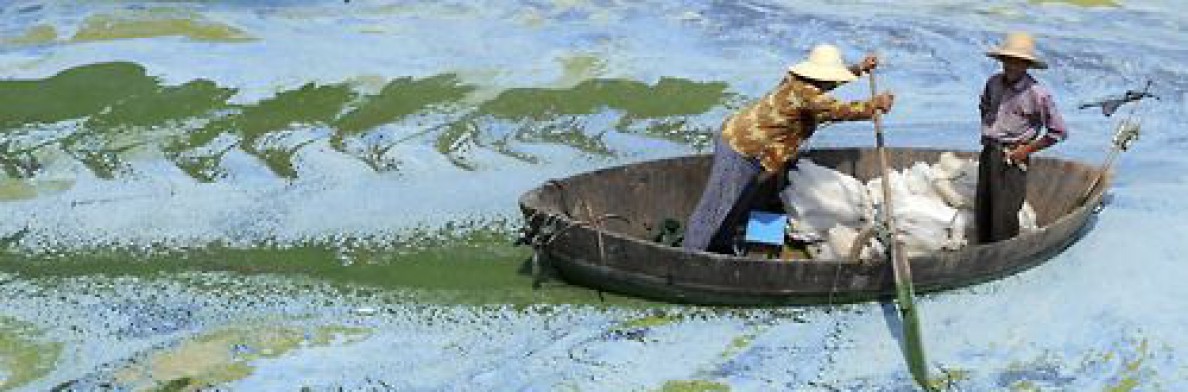
The topic I worked on was about antibiotic resistant bacteria, and their prevalence in the soil. For this research, we took samples from high school students, as well as our own samples, of soil. We then diluted these samples and observed different reactions to antibiotic over time. By using different amounts of antibiotic for different dilutions, we were able to get data about just how prevalent antibiotic resistance is in our every-day environment. We then went to Clarke Central High School and repeated the experiment with high-school students. In the future, I would like to learn even more about antibiotic resistance, because I believe that this will become a much larger issue that we will have to face as it will become more common problem as we continue to use antibiotics to treat illnesses. To understand more about this topic of research, we studied in class about antibiotics. We learned the processes by which resistant strains can overcome their environment to repopulate with more adapt versions of bacteria. We learned that in the future, the overuse and misuse of antibiotics will lead to bacterial infections becoming much harder to treat, which will result in serious problems for people, including higher rates of death. By presenting this topic to high schoolers, I believe that I was better able to grasp the topic. By helping teach others, I was able to reinforce the information for myself. I was able to use stimulating information as evidence to show the high school students that what they were learning about was something that they could observe, instead of just reading about or learning in a lecture. They used tangible data that they gathered themselves, which was a benefit to learning. This issue is relevant to the audience, and we demonstrated this by showing results happening in their own yards. This issue will be relevant for their generation, because as time goes on, more and more antibacterial resistant strains will be present. As far as creativity goes, we tried to use different techniques of letting them learn for themselves with our guidance. We allowed them to enter all of their own data, while also setting up separate stations, to which we taught different aspect of the lesson. I discovered through this project about my own capabilities to help others learn. I hadn’t considered myself a good tutor before then, but I felt like I was truly able to help these students understand the concepts. I also learned that the students themselves were truly interested in what we had to say, and they took pride in finding results from their own projects. In high school, I wouldn’t have imagined being very involved in any sort of research with a larger university, but I was glad to see these students seemed like they actually cared. Upon entering the classroom, I immediately recognized that these high school students were rowdy, since I believe they were mostly sophomores. When I saw this I knew we needed to make our lesson as interesting and attention-grabbing as possible. By splitting the class into groups, we were able to get all the students involved in learning about the topic. This adaptation helped me learn that before presenting in any situation, you need to read your audience, and make adjustments to how you speak and how you discuss the lesson. I believe that I may want a future in pharmacy, and I hope that when I give future presentations on seemingly “boring” subjects, I will be able to take what I’ve learned from this experience and apply adaptations to how I present. If I could do anything differently, I would perhaps have a closing summary of what we had done, but the class did not last long enough for us to do that, or I would have tried to maybe rotate stations. By doing this project with the high-schoolers I was able to learn more about how much bacteria becomes resistant even when high doses of antibiotic are applied. By analyzing the audience, we had to come up with creative methods of teaching, which only helped me understand our topic of presentation better. With their reactions and feedback, we could incorporate better use of language in our presentations, which I believe will help tremendously with future lessons. From this lesson, I will be able to better my own future presentations to allow me to get my points across to the audience in the best ways possible. Hopefully, I didn’t come across to distant, because I really wanted to be as welcoming to the students as possible. It is easier to communicate to people who are comfortable with you, and this is exactly what I was trying to achieve. In the future, I could work on being more present in these situations, and being more willing to serve as a helping hand, rather than just someone who studied the subject before they did. This assignment was effective in addressing a real world issue, because antibiotic resistance is something we should all be made more aware of. Feedback from the students helped me understand how people in the future will be addressing this issue, and this project was able to show me this.
Final Project Reflection- Michael Silver
1. For my final project, I went to Clarke Central High School to help AP Bio students learn about antibiotic resistance.
2. In order to prepare for this field trip, the entire class went through our own walkthrough of the same experiment the high school students would be conducting. We collected our own samples of dirt from different areas on campus, logged the exact latitude and longitude of our samples, and then brought them into class in order to dilute them to the point where we could count the levels of bacteria. We then plated the bacteria, adding different amounts of antibiotic to the plates. By the end, we had three different plate sets: those treated with no antibiotics, those with Tet3 antibiotic (which was the weaker of the two antibiotics), and Tet30 (the stronger antibiotic). Each set had plates with staggered levels of diluted soil, ranging from 10 to 10,000.
After the plates had incubated, we counted the colonies of bacteria. Since the levels of dilution varied, some plates were swarmed in bacteria, while some had little to none. We were told that the optimal bacteria levels for counting were between 30 and 300, so we used the plate with levels between that amount and multiplied it by the dilution factor in order to get an estimate of how much bacteria was in the real-world soil sample.
3. This project was interesting because it had a very hands-on approach. By conducting every step, I felt engaged in the experiment and it was easier to understand how each step in the process worked, whether it was the dilutions or the antibiotics or anything else. I learned that, scarily, there is a lot of bacteria in our nearby environment that is resistant to antibiotics. I also found that working on the subject matter a second time, while presenting and helping the high school students with their own experiment, made the information stick in my head. Articulating the process in my own words to the students made me really think about what it meant and how antibiotic resistance works.
4. We incorporated the following characteristics by relating the experiment to the high schoolers’ individual lives. Everybody, at one point or another, plays outside or even walks on a dirt path. But nobody really stops and thinks about how the bacteria in the soil exists and how it is getting stronger and more resistant to common antibiotics. By highlighting a global health concern, and then relating it back to their lives, it creates a relevancy for the audience. By thinking about how the problem occurs and taking necessary scientific steps to visualize it, we stimulate the students intellectually. Lastly, the experiment itself was creative because it wasn’t an ordinary classroom exercise–instead, we were actively conducting research and experimenting.
5. As an education major, it was nice to get into a classroom and try out skills that I will eventually be using in the future. I definitely felt more confident, and I felt surprisingly comfortable talking about the subject even though science is not my strong suit and I don’t want to become a science teacher. It made a huge difference that I knew the material well and felt comfortable talking about it in my own words, and I think that I would not have felt as comfortable if we didn’t perform our own similar experiment beforehand. I don’t think I had any assumptions about the audience, but I was surprised to see the quality of educational materials at Clarke Central–every student had a Chromebook readily available.
6. Going in, I figured that the students didn’t know much about the experimental process, so I tried to explain it as simply as possible. For me, that was easy, because in order for biology to make sense in my head it has to be in layman’s terms. This made it simple because the terminology that I remembered wasn’t confusing for the students. In future communication efforts, I can execute this similarly in order to get my point across without confusing the audience.
7 I would have tried to create a dialogue with the students in order to get a better understanding of how much they knew about the topic or experiment itself, so we could cover more ground without being repetitive.
8. This experience helped me understand the material relating to antibiotic resistance because it gave me tangible objects to associate with the unit terminology. By analyzing my audience, I was able to get a general feel for how well the students grasped the material, so that I could explain what they didn’t know. As the experiment went on, it got more complex, and it was important that the students understood the initial procedure so that they could extract data from their results. Feedback from the students was important, because it allowed me to further understand their limits on what they knew and what I needed to explain to them.
9. Again, as a future teacher (hopefully), this classroom experiment will help me by giving me real experience in a school with a core subject matter. Especially because I don’t plan on teaching a STEM subject, it gave some light on how being a STEM teacher works and how it is different from, say, a history teacher.
10. I think that I came across the way I hoped to come across. I think that I offered myself to the class as a resource to help with the assignment without doing it for them, and when needed, could explain the process in a way that made sense. In the future, I hope that I can improve my communication skills even further.
11. While the assignment that I completed was different from that described in the question, I still feel that this assignment was effective in helping me learn the about antibiotic resistance while also getting to help in the local Athens community.
Final Project Reflection – Harina Somasundaram
- The outreach project I choose to work on was the Rooker Hall Composting Initiative. This was aimed to educate RAs about composting within dorms so they could take that to residents and carry it out. This would start within the ECV community then expand all across campus.
- In order to execute this project as a class we had to research what to compost, what not to compost, the easiest way to store and collect compost in the dorm, and how compost can help the environment and soil. My partner and I focused on how to make compost. This included what to compost, what not to compost, and how to take care of the pile. Our research included using multiple sources then compiling it all on one page in the wordpress sight for future reference.
- Some of the things that were highlighted through the presentation was: Why is composting important, What to and not to compost, Examples of composting already happening, finally How to collect all the compost. Presenting this material allowed me to understand the material much better due to being put in a situation to explain it and sell it to others so they can implement this initiative. It also made me dig deeper and look into the scope of the office of sustainability. The information was put together with guidance from Christy Tweedy.
- Why: Composting benefits our environment by improving soil/water quality, decreasing methane, helping with overall global warming. It is also a safe waste disposal mechanism.
- Do’s: Anything organic – vegetable and fruit scraps, coffee grounds, plants or leaves, egg shells, shredded paper, dryer lint, hair, and cardboard.
- Dont’s: Glossy or colored paper, bones, feces, metals, plastics. Meat is also not recommended as it attracts vermin
- Examples: All food waste from the UGA dining halls is currently composted then sent to the bioconversion center. Then used around campus. This shows how composting is helpful.
- Collection: Electric Bike – It is owned by the office of sustainability and run by interns. The bike will be used to collect the compost from the bin in the lobby of Rooker Hall on Fridays at noon.
- This presentation proved to be intellectually stimulating because many of the RAs were very involved and asking questions. This showed that they were thinking about composting in a new way. They actually started to think this idea was practical, hence we sold it to them correctly. Our presentation was relevant because the RA’s were the people who would take it to the residents for implementation and educate the residents. From our eyes the RA’s were the first step to implementation. Our presentation was creative because it included a presentation which illustrated our ideas, we also had flyers made that made it easier for RAs to understand what needed to be done. We also had pictures of the bike and the green bin as a prop.
- I did not think this presentation would have much of an impact on the RAs and was thinking to myself “which college student actually cares about composting” as I thought when I started this out reach project. To my surprise, the RAs were actually very interested as they were asking some very in-depth questions and I saw some of them even taking notes. This makes me believe that our initiative will actually be useful and carried through. I started to sense myself becoming more confident as the presentation went on and the RAs started asking questions which I actually new the answer too.As far as technology goes, I learned to come with presentation material like in this case there is not a projector. So maybe print out the slides.
- I believe the first thing we as a group adapted to was the style of presentation, given there was not a projector and that was what we were assuming. I personally adapted to the audience when I saw that they were more involved than I thought they would be. I tried to answer a few questions. Another thing I believe our group adapted to well was when they started asking questions in the middle and we had to steer away from the presentation order we had planned and present as we answered questions. This definitely kept the audience more engaged. I learned to research the topic a little bit more in depth than whats on the presentation next time so that adapting is a bit easier and I won’t have to look at the slides all the time.
- If given another chance, I would know the information on all the slides better rather than just focusing on my slides because there may come a point where we may not have a way to present the visual. I would also want to give more time for questions from RAs and start the presentation my letting them know that we will present then take questions at the end. I would like to do this because many of their questions were covered in future slides and this way we can also get our point across without being flustered.
- This experience gave me a “beyond the classroom” outlook. It showed me how what I am learning can be applied. Analyzing the audience while presenting and adapting helped me understand what kind of presenter I am and how I can grow. It also helped me see the scope of this project. Forming a presentation gave me a deeper understanding of the topic and aspects beyond the topic like the office of sustainability. I am a very engineering/corporate minded person so this outreach made me step out of my comfort zone and pursue a topic I usually would not give a second thought too.
- I can use this information to practice composting myself and to teach sustainable practices to others. This experience also taught me to not judge the audience to hard before walking into the room. The presentation itself taught me to give a strong introduction so you control the presentation and not the audience.
- Due to presenting and only talking on what I personally researched, I believe I came across confident. Next time I would like to be able to answer more questions to show that I am more involved than just my part — to do this I plan on glancing over all parts before the presentation.
- This assignment was effective because it made me learn the content at a deeper level. The presentation helped me compile the content and figure out whats actually important and what needs to be focused on. I liked the relevance of the topic due to being a student living in Rooker. The feedback from the RAs allowed be to believe the impact we actually had due to seeing their interest.
Composting infomercial

What: The creativity of this compost is without being said and uses a nice blend of colors to grab your attention on to certain details and aspects like the pie graph, also I like the drawings of the brown and green items. This infographic has relevance to the audience because it stays to the point and doesn’t stray off on stuff that doesn’t matter. The infographic is intellectually stimulating because. it gives a lot of relevant and easy information to get the point across.
Gut: Honestly the emotional response I got from this was happy with the cartoon cows. The information that 250 million tons of trash was produced in 2010.
So What: Something I had not thought of before was exactly how much trash humans produced, and it has probably become more since 2010. I think the perspective the author was trying to bestow with this was that we produce a lot of trash and a lot of it can be composted and reused and is relaying what can and cant be put to a better purpose than a landfill.
Now What: I think that the stuff in this infographic is important and should be included in an infographic created by the class. The information on how much trash we produce should be included to really put things into perspective.
RA powerpoint link
https://docs.google.com/presentation/d/1wA3OzNNU_TdEjRB3I1KLVt2gZEFoDGxG7nMctpwM_Mg/edit?usp=sharing
anyone with the link can edit
Rooker Hall Meeting
Post-Implementation
Are you yourself composting?
Were residents motivated to participate when first informed about the project?
Have the residents been responsive to the project?
On average, what percentage of residents do you believe are actively composting?
What have been some hindrances to the success of the project?
Has odor been a problem of any sorts in relation to the compost?
Do you have any suggestions for improvements in the future?
Post-Meeting
Do you believe that you were adequately trained to enforce such a project?
Do you believe that this project has the potential to be successful long-term?
Do you have any further questions about the project?
Do you have any suggestions for improvements on the project?
Infographic Comment
Josh Marcinczyk’s Graphic
1. What do you think the main message of the infographic was?
- The message of this infographic is that it is very easy to compost at home, and that anyone in any situation can do it. It covers every
2. How was its readability, font, color choice?
- The graphic was very small, so I google searched the image and found a larger one that was more legible. The color scheme includes greens and browns and felt very natural and appeared earth-like.
3. When we make our infographic, we will be trying to convey information to encourage students to compost, include a comment on what you think the purpose of the infographic was.
- The purpose of this graphic is to inform the reader on how to compost by providing a question with two or more possible answers, where every answer leads to a different way to compost at home primarily.
4. Include in your comment one thing that should have been cut from the infographic
- All the information in the graphic is useful and relevant, but some things need more explanation as the reader might not be familiar with some of the terms such as bokashi and upcycled pallet bin.
Composting Info-graphic
Composting Info-graphic
Ryan Southard
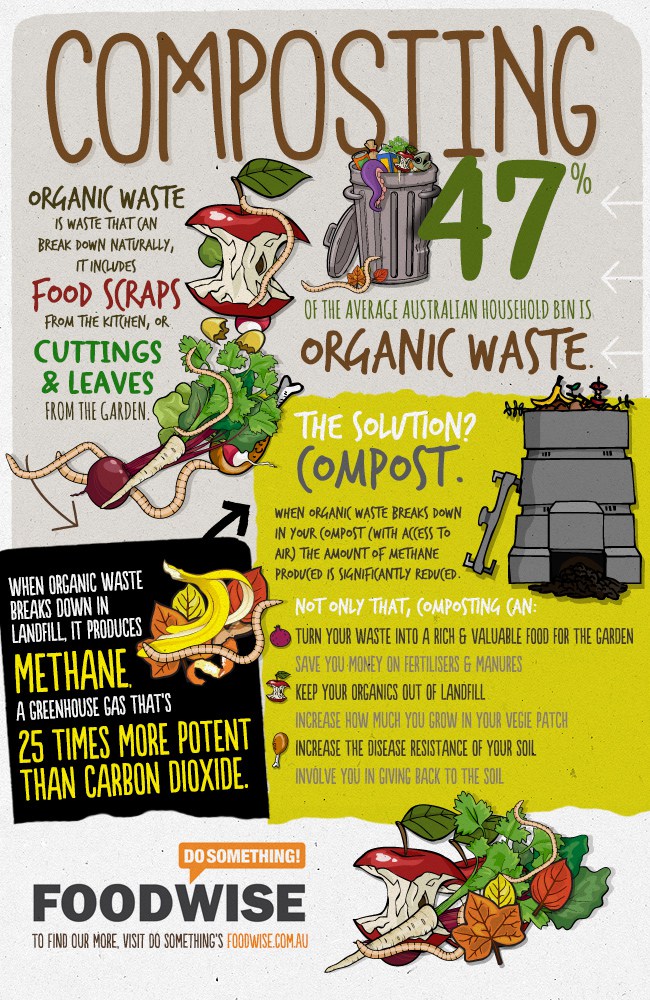
What:
This info-graphic is intellectually stimulating because it provides useful information about the reason’s behind composting. It doesn’t just tell you that you can do something, but it tells you what to do, and why you should do it. It is also creative because the visual design is well thought out and is visually appealing.
Gut:
This graphic invokes a surprising amount of hope for me. I constantly hear about environmental issues, but I don’t really ever hear about what we can do to prevent them, so it’s nice seeing something which both informs people of these issues while also giving a viable solution to them.
So What:
I hadn’t really ever thought about the effect that methane might be having. When people talk about greenhouse gases, most people will think of carbon dioxide. However, it’s probably important to remember that other gasses have negative effects and can come from other sources beyond the classic ‘pollution source’ such as cars and factories.
Now What:
I know that I’ve never really given thought to how much my food waste might be affecting our world, so it could be nice to include similar information in our info-graphic for students, as I would assume many of them haven’t considered this as well.
Infographic by Ku Kim
Ku Kim
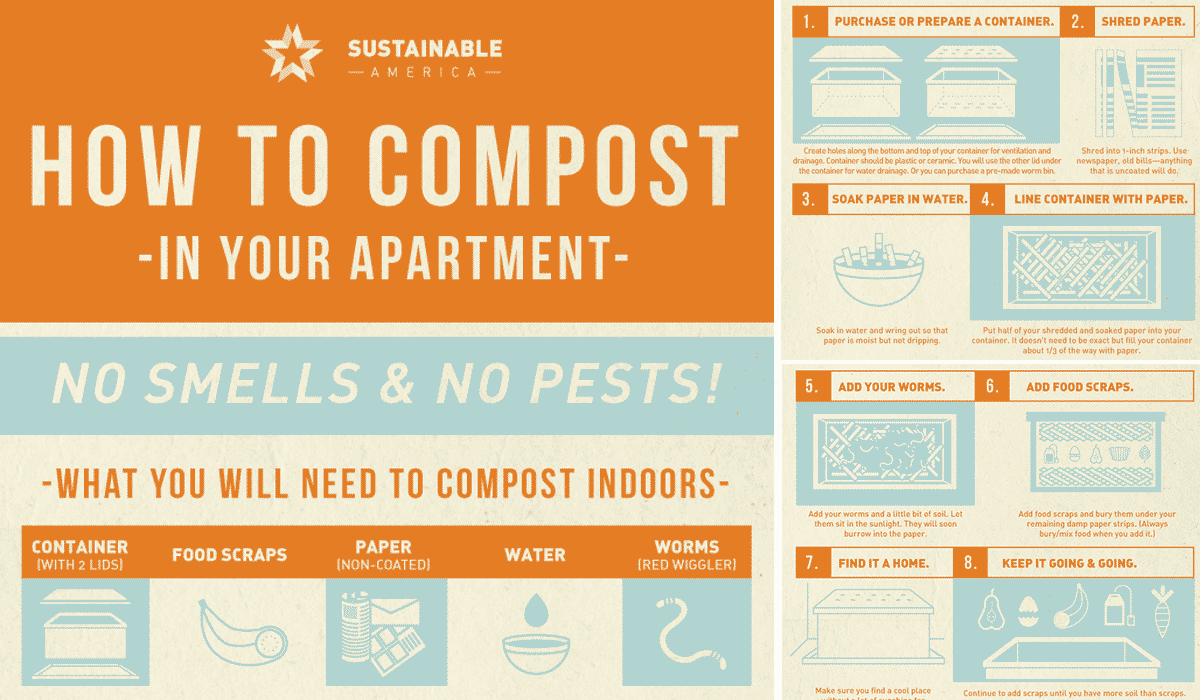
What: The infographic is very intellectually stimulating because it educates those with apartments on how to make a difference. It’s relevant to the audience (aka those who own apartments) because it appeals directly to them by saying “how to compost in your apartment.” It’s different and creative because I haven’t seen compost infographics or posts geared towards those who specifically live in apartments.
Gut: Initially I really liked the infographic and what it was portraying; however, now that I am analyzing it, it doesn’t educate as much as it could. It generalizes the categories of things you can add to compost, but food is too broad. There are many food scraps that can’t be added in.
So what?: I think the artist was trying to get millenials and those living in apartments to try and compost, even though their living situation isn’t most suitable for it. He or she oversimplified the concept of composting, making it look far too easy to do. They could’ve done more thorough research. Instead, they have not 100% accurate info.
Now what?: I certainly think that after analyzing some infographics, we need to make design and info of the utmost priority. We need to consider how we should appeal to students because why would they be interested in changing their habits if they truly don’t see the simplicity and benefits of it?
Infographic Comment
Karan’s infographic
- What do you think the main message of the infographic was?
The main message was that you can compost indoors/ in small spaces and to provide information about how to do it.
- How was its readability, font, color choice?
It was sort of hard to see without zooming a lot and scrolling. The readability, font and colors were fine it was just super skinny and long.
- When we make our infographic, we will be trying to convey information to encourage students to compost, include a comment on what you think the purpose of the infographic was.
The purpose was to teach people that live in apartments how to start composting and to simplify the process.
- Include in your comment one thing that should have been cut from the infographic
I think all of the information in it is important. Some of the larger sections could be included in tips instead to save space (such as 7. Find it a Home- where it would work best could be bulleted without a picture pretty easily)