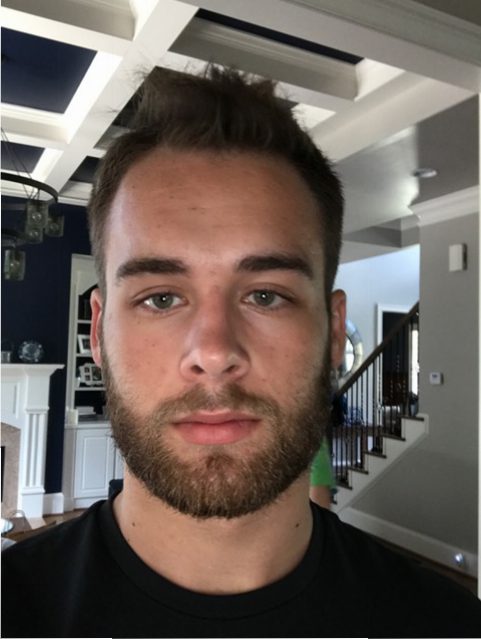
Introduction – Julianna Mallette

I personally love science, and took a lot of elective science courses in highschool, like AP Chemistry and AP Physics.

My favorite of those classes would have to be AP Environmental Science, because the teacher was an amazing person who taught the material in an interesting way.

I would like to expand on what I have previously learned about biology, and hopefully this class will help point me in the direction of what major I should be in.

I would like to ask more questions about what the effects of these antibiotics in the human body are, over long periods of time. It makes me wonder what all these modern chemicals in our food could be doing to us in the long-run.

I think my fellow students would be most interested in methods of making composting not only more accessible, but also more mainstream and appealing to the general population.

I think that through civic engagement and service learning, we will bring new perspective to younger generations, since this problem will only worsen for them as time goes on. Hopefully I will learn how to make strong arguments for our planet’s sake.
Introduction

In high school, I only took a few life sciences. I started with biology freshman year and then took anatomy/physiology senior year. Anatomy ended up being my favorite one, just because of how much I liked the teacher and how enjoyable the class was as a whole. I took physical sciences throughout high school, both APs and normal. However, this will be my first science course of any kind in college. For this class I hope to gain a better knowledge of biology and the environment, and especially how the two of these interact.

To find out more about antibiotics in the soil, I guess I would ask not only how they are getting there, but also what effects they have on the soil and crops. The videos we watched largely addressed carbon, compost, and soil, but never really the harmful effects of antibiotics in the soil.

I think composting would be the best issue to approach other students about. It’s a pretty simple thing to do that can make a big difference, and wouldn’t be a large inconvenience on someone. Because of this, other students would be more likely to listen and even try composting.

The service learning project sounds like it could really help expand the way I think about helping the environment. By contributing to a national database, it shows just how easy it can be to help make a difference. The project also will help demonstrate the effect antibiotics has on the soil in various locations.

Introduction

In high school, my experience with science involved biology, chemistry, and two years of physics. My senior year I took AP Physics, which I enjoyed because it was a challenge yet one in which I was very interested. I enjoyed learning about the science behind everyday things, and I enjoyed it particularly because the things I learned in physics were applicable to everything around me. I hope to get a new perspective on biology in this course, as in high school my biology class only focused on evolution and genetics. I would be interested in working with the Clarke Central High School students because I love to work with other students, and it would be a great opportunity to engage with the local community while learning about biology. I am also interested to learn more specifics about composting. I’ve seen it in action, but I would like to learn more about what is compostable versus what is not and how the process works scientifically. I feel we can all understand the problem of climate change and how our environment is changing, so since we are all directly impacted by this issue, we would all be interested in compositing and other ways to exist while benefiting the environment. With civic engagement, we will learn about local perspectives and what people think about environmental issues. At UGA, we often are isolated to the community of students and their perspectives, so its important to step beyond the boundaries to learn how other people think so we can better teach and learn from one another.

Hi! I’m Josh!

  1. I took honors biology, chemistry, and human anatomy as well as AP Physics. I liked human anatomy a lot because I learned about the anatomy of the human body and the physiological nature of humans which I was able to apply to myself when I go to the gym. I also enjoyed physics because I felt like I had a better understanding of nature of motions by the end of the year. This (BIOL2103H) is my first science class in college.
  2. I want to have fun, get a good grade, and be more environmentally aware so that I can live accordingly.
  3. The outreach with the high school students seems very fun because we get to give back to kids who likely look up to us and we all get to help contribute to a national database, and being apart of something on the national scale is something that is very cool for teens.
  4. Given that our class is an honors course, I would imagine that many of us are interested in creating a new type of project/initiative as we are all very high achievers.
  5. By helping with this service learning, we can learn about how ideas involving civic engagement are thought of and developed, the importance and impact that involving the whole community can have, and about other successful civic engagement programs and the qualities that enabled them to succeed.

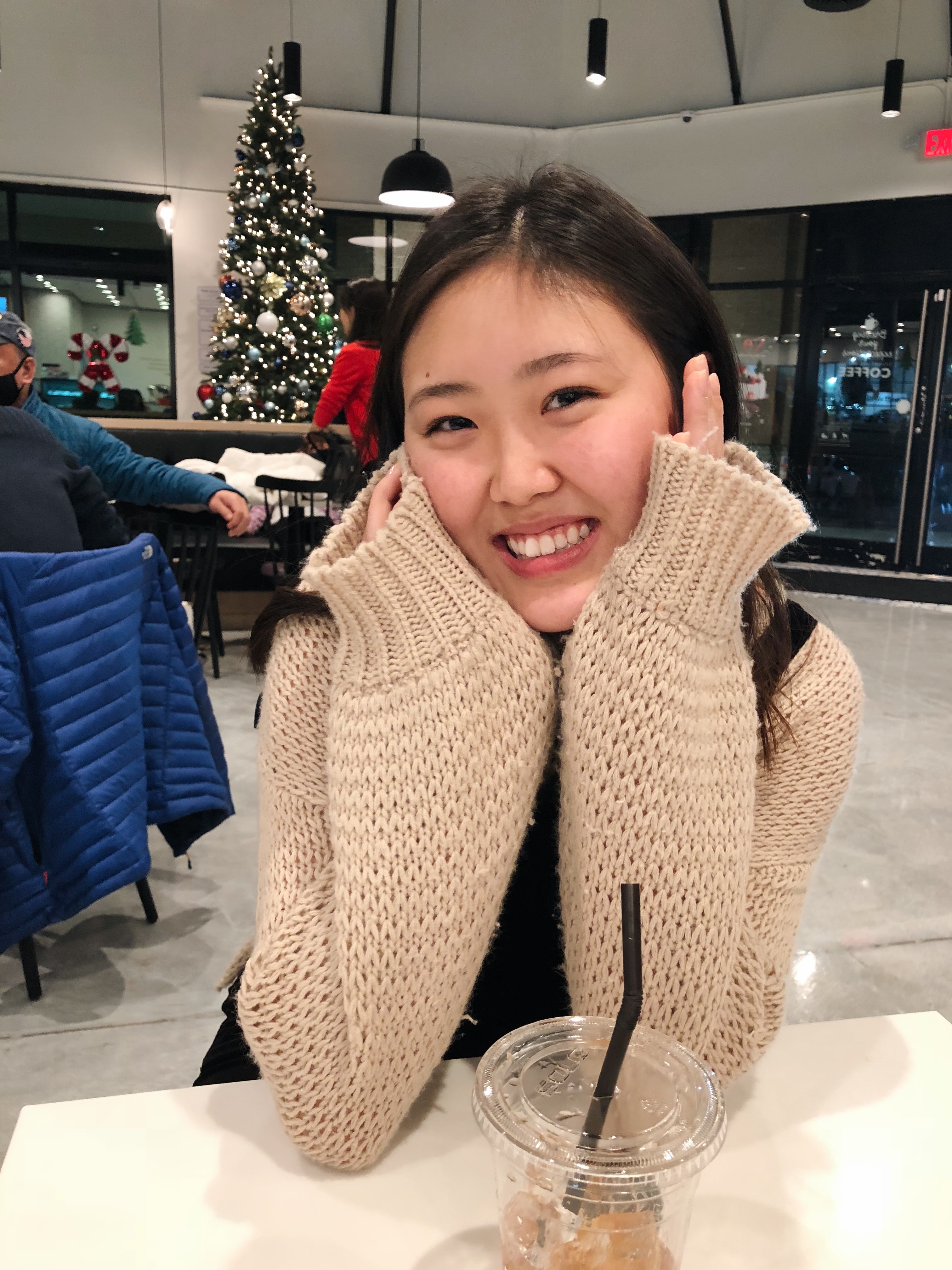
Introductory Blog Post/ Self Portrait -Ku Kim

at Paris Baguette in Duluth! 

Hi, I’m Ku (pronounced as Q)!

I took honors bio at Lambert High School and I loved the class despite my disinterest in the sciences. It was very interesting! Bio was probably my favorite high school science course. I only decided not to continue with the AP course as it was not essential to my future major and because I did not want to risk my GPA. I also took honors chemistry as well as AP physics. I found that I did not enjoy those classes at all.

Mostly, I am here in 2103H to learn more about bio and further my understanding of what’s going on right around us.

After the video, I am particularly interested in composting since I have not tried it before. Not only would it be a fun challenge to take on but it’d also be helpful to the environment, big or small. I want to know which antibiotics are currently in soil and why/how fast the soil becomes antibiotic-resistant.

I think my fellow students would pay close attention to the whole excess carbon issue. We hear all the time about global warming and climate change as well as sustainability issues, and so for each of us to be able to possibly play a role in better our atmosphere, I think we all might want to do what we can to help.

I do expect that by doing this, there will be more awareness about the soils in our community. I’m excited to see people wanting to get more involved!

Introduction

  1. I took the regular classes in high school: biology, chemistry, and two Physics, and have yet to take a science course at UGA.  I actually haven’t taken a science course since my junior year of high school.  Out of all of them, i’d have to say I liked either chem or bio the most because physics was just absolutely terrible.
  2. id like to get a better understanding of the material in this class.  I’ll be honest, when I signed up for this class, I thought we would be learning about like how the mitochondria is the powerhouse of the cell, but nos that I know that this is not what the class is about, I would like to learn more about the soil and the ways we can reverse climate change.
  3. I guess I’d like to learn about how we can stop the misuse of antibiotics in our society and how specifically they hurt the soil.  Really a basic run-through would be nice.
  4. I think the issues to appeal to my fellow students would be that climate change causes weather extremes and nobody likes it to be too hot or too cold, or that no one really wants to die from infections nowadays.
  5. With helping with the service project we can learn how to head change and be the leaders of change to get things done that we want to be done in the community.  Really we can get a good understanding of how to go about changing the bad things in our community.

Reflective post #1

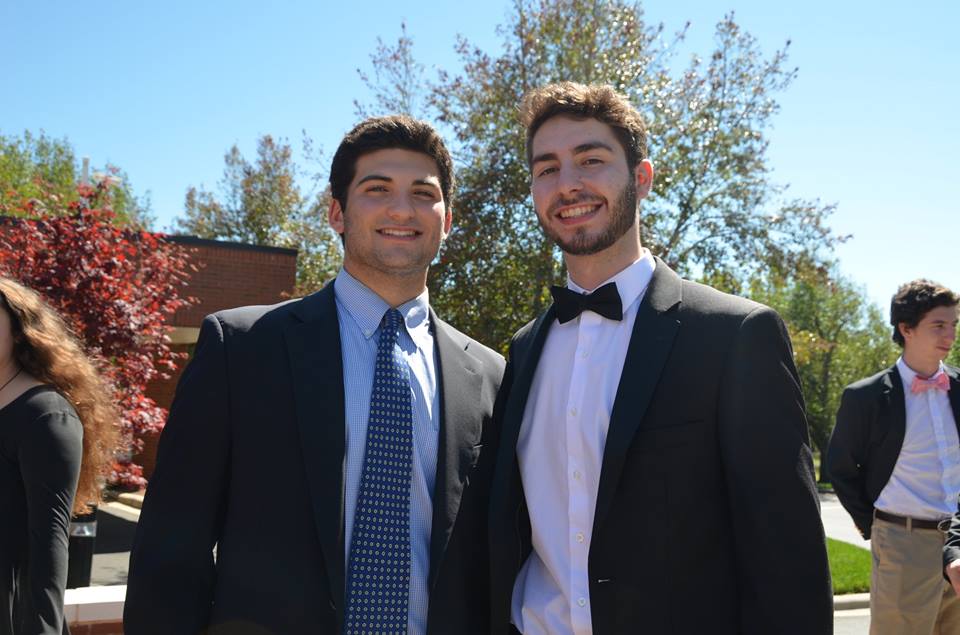
This is me with a friend from high school looking all dapper (I’m on the right).
  1. In high school, I took intro science classes each of my first three years: Physics as a freshman, Chemistry as a sophomore, and Biology as a junior. I’m not really a science-oriented student, so I didn’t have a favorite course, more just a favorite teacher. My Chemistry teacher was incredible so I always looked forward to listening to her even though the course material wasn’t too fun.
  2. Even though I’m taking this course because it’s required for my major, I want to get a basic understanding of Biology. I passed Bio in high school, but never fully grasped a lot of the concepts. I think that having a small classroom environment and unique agenda will help me really understand biology.
  3. How much does the diet of farm animals play into the addition of antibiotics in soil? If we fed farm animals food more similar to their undomesticated diets would that make a change?
  4. It seems to me that the reasons composting hasn’t really taken off on a big scale all comes down to money. How could we make composting and reducing the amount of antibiotics in soil more cost-efficient so that the general public would approve it over cheaper, less eco-friendly options?
  5. I think that going out into the local area and promoting composting and other ideas will help me learn how to connect with others and have civilized discussions about issues. Climate change is always talked about in the news, so if we start by making a small difference in the Athens community, we can make a broader impact on a larger scale if we stick with it.

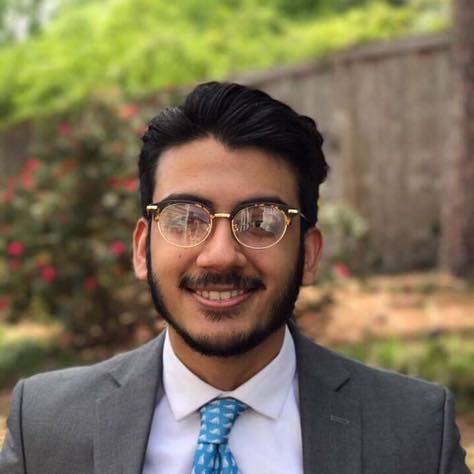
Self Portrait: Karan Pol

Majors: Economics (AB/MA); Political Science

    1. In high school, I took a two-year intensive physics course that went through the topics covered within the initial courses that one would take in a physics major along with an additional focus on climate change science, understanding the greenhouse effect and factors that exacerbate it along with concepts of fuel efficiency.
      Furthermore, last semester, I took a class titled Forestry and Natural Resource Conservation, which went through summarily various concepts in conservation science, ranging from soil, to wildlife preservation, and more.
    2. I particularly enjoyed my high school physics class, as it took concepts that I was already interested in from a political perspective and provided background knowledge that solidified my viewpoints and made me a more critical thinker, specifically in regards to climate change science.
  1. In taking this course I would like to diversify my courses of study, seeing as my major (Economics) lends to a more mathematical and political degree, discounting many concepts that would be integral to any occupation going forward with my degree, particularly as I hope to work within the realm of public policy.
  2. Questions on antibiotics in soil or composting:
    1. What methods are used to identify antibiotics in soil? What tools are necessary for doing so?
    2. Is there a standardized list that outlines what goods are to be composted, and why are these instructions not provided either in a classroom setting already or by compost bins?
    3. How prevalent is the discussion of soil and composting in the political realm of policy and legislation?
  3. Composting is an issue that seems to be the most relatable to my generation of students, seeing as many elementary schools (depending on location), would focus deeply on teaching responsible recycling methods to young children. Composting serves as an extension of these teachings and as such, should be easily adoptable as a field of study.
  4. This course highly values outreach in the community which, while discussed in high school, is not something that is often valued for students, as education and income are the primary goals. Through this class, hopefully, I can find ease in civic engagement as well as enjoyment, so as to bypass the priorities that I currently have for myself and give back to the community as much as I can.

Introduction Ashley Compton

  1.  I was in an IB program in high school so we all took a semester each of chemistry, biology and physics then chose one science to do for the last four semesters.  I chose Chemistry because I thought it would prepare me best for what I wanted to do in college- I used to be pre-med, but I had about the same interest in all three.
  2.  I would like to learn the more applicable parts of biology to daily life instead of things that I won’t be able to use in my future.  I hear so much about problems with the environment, but knowing why and how we can make changes in day to day life that will impact these issues would be really nice.
  3.  I would ask about the entire process of antibiotics getting into soil- it’s something I’ve never really thought about before and don’t know much about so I don’t have super in-depth questions about that.  As far as composting goes the science behind it would be interesting to know but also how to get involved in doing it since it still isn’t very mainstream.  Also, is it possible to take smaller steps first (since a lot of people aren’t going to go all in right now)?
  4.  I think global warming is a huge issue and that most other students understand that and care about helping our environment become healthier, so stressing that as well as the dangers that we face by continuing what we are currently doing and why.
  5.  Any service learning ties in very tightly with civic engagement, but for me, I wouldn’t have thought about getting involved with something like this before learning about it, so I would learn about the processes/science and more specific impacts on the environment.  I think we always hear about things that are going wrong but there isn’t as much information about how we can help, so having the skill to know and explain that is really important.

Introductions – Greg Gruschow

In high school I took science classes involving biology, chemistry, and physics. Chemistry was my favorite, because I enjoyed learning about the basic building blocks of matter. In this course I would like to know more about the internal processes of plants, such as photosynthesis. In terms of composting I would like to learn more about how compost specifically helps plants as opposed to other types of soil. I think my fellow students would be interested in what the topic of global warming involves and how it can affect them in their lifetimes. I think by learning about what composting does, this class will teach me how big of a problem global warming can be.