Allaina Siler UGArden Post


Image: Something that surprises me about the facility

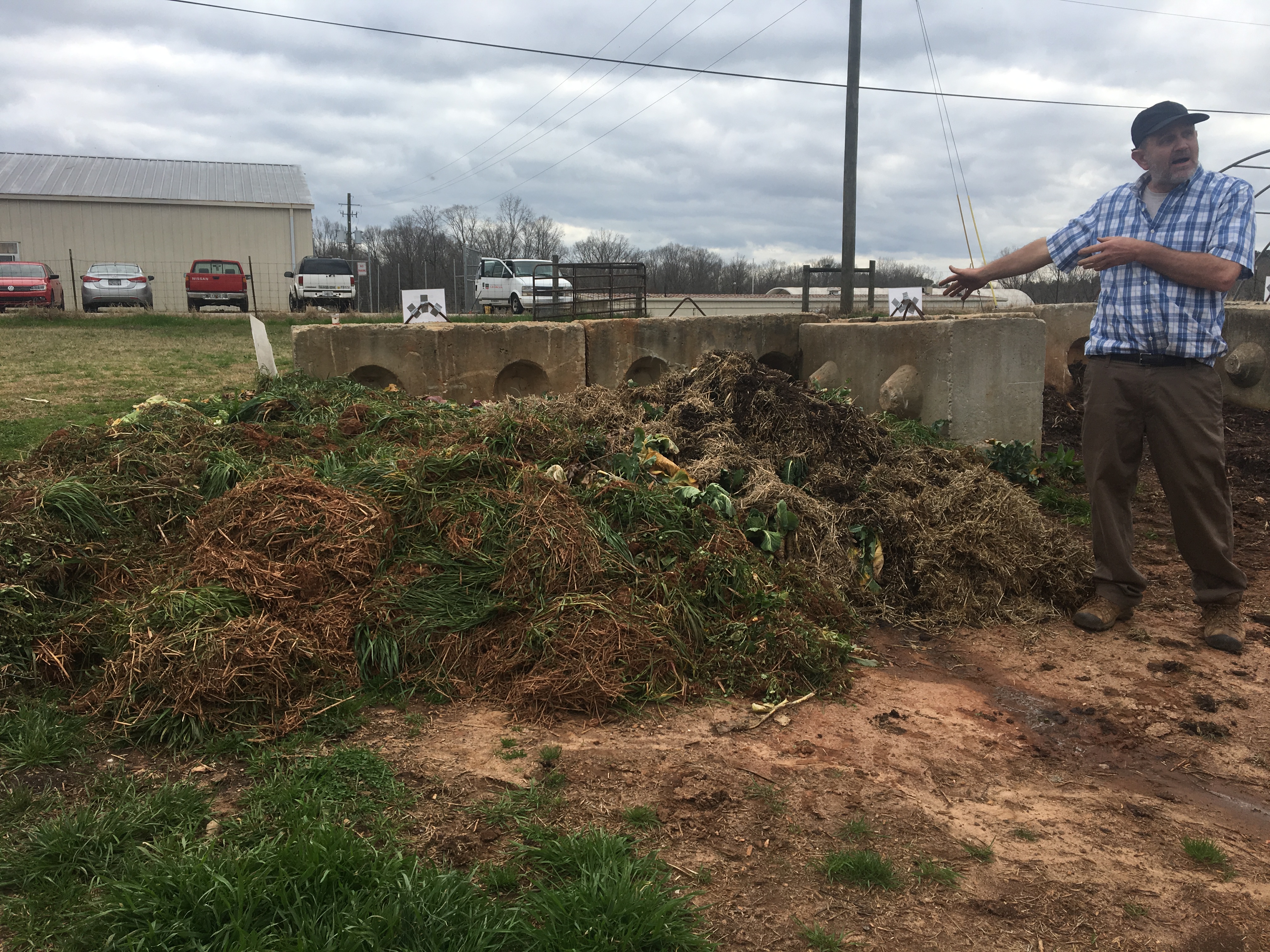
What surprises me about the facility was their large-scale composting, and how composting sometimes involves more than just dumping scraps in a spot. Active composters keep the material separated into zones based on how decomposed it is, and sometimes the material has to cycle through another time to be done.

In this picture, I see the UGArden speaker and professor showing the completely plant-based compost area of the garden. When looking at each section from left to right, the compost material gets less and less course, and it decomposes to create rich compost material to aid crops.

One thing that really strikes me in this picture is the drastic change in the size of the piles (going from left to right). It’s surprising how such a large mass of material through decomposition yields so little compost material in the end.

This picture makes me think about how long it truly takes for the plant-based material to fully decompose for composting. I thought it would take at the most two weeks for it to graduate on and on in the different stages, but it usually takes up to months, and for full decomposition, sometimes years. I always thought that it would take around six months at the most to break down, but in this intermediate composting method, it takes much longer.

When I look at this picture, I feel called upon to start composting. I know it would be hard to do it in my dorm room, but by seeing the piles in person, I feel that it’s important that I do my part to not waste scraps and plant material. If I don’t compost, the material will just end up in landfills and be put to no use, so it’s important that I do the right thing to help both crops and the environment.

I think this picture is about the visible process of composting. I had never really seen in up close and in person, as my family doesn’t compost, so the visual was nice. And, his commentary about how they facilitate this process was really educational as well.
UGArden – Harina Som

Compost
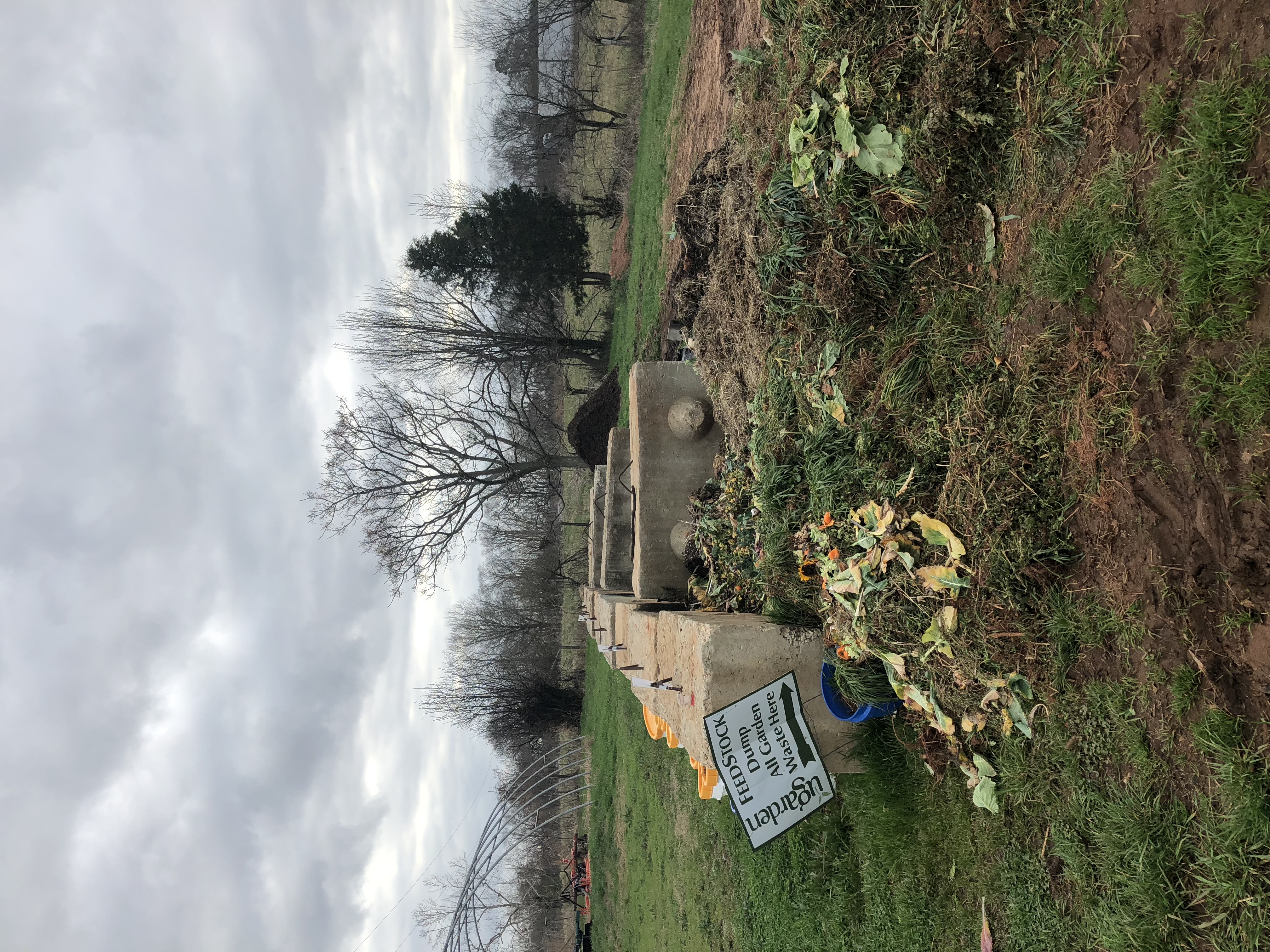
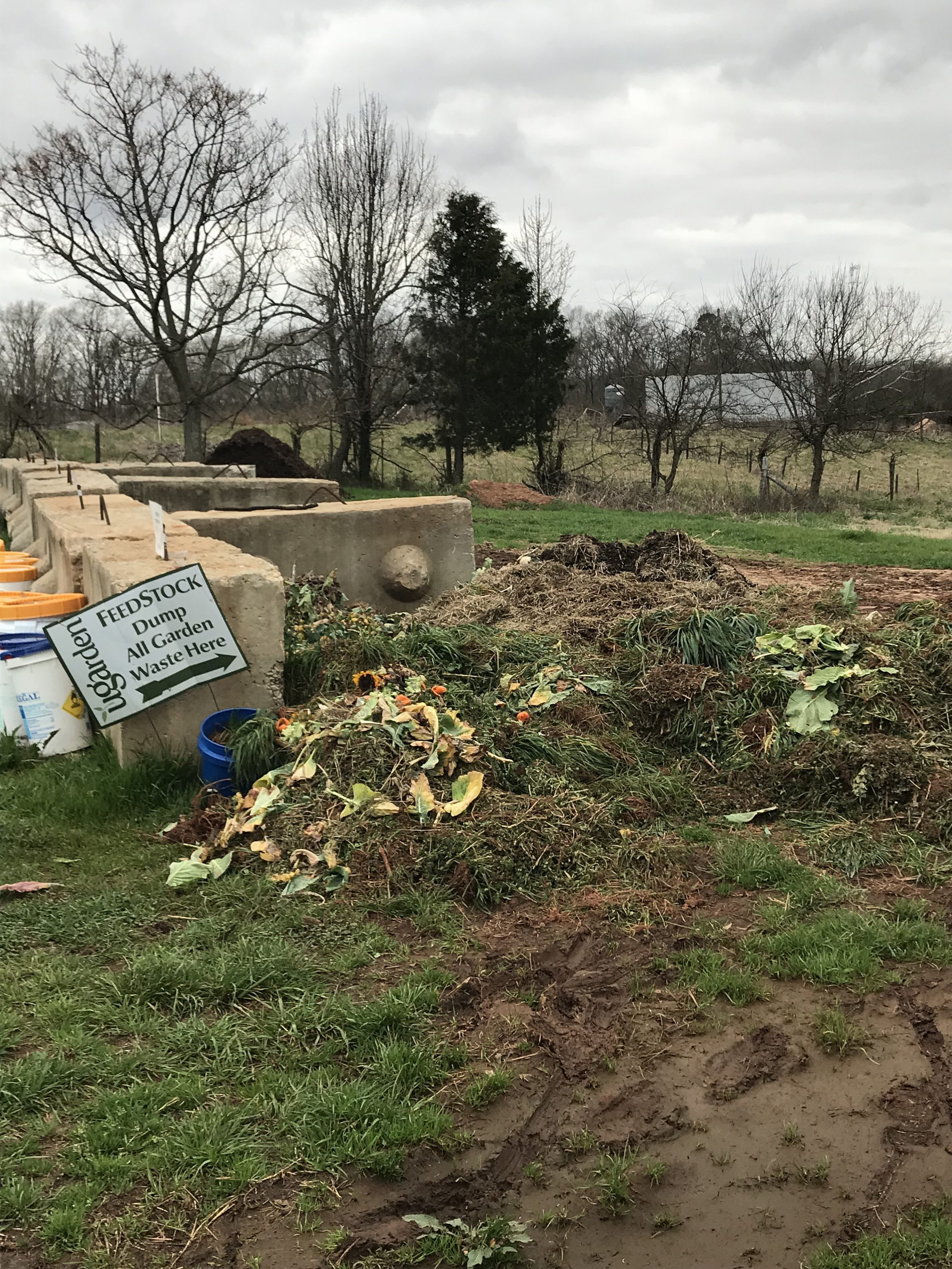
  1. In this picture I see a pile of compost and the steps the compost pile goes through to get to the end goal which can be seen towards the back of the picture. The end goal is a pile of decomposed material which is essentially fertlizer.
  2. One striking thing I noticed in this picture was the amount of work a pile of compost has to go through to become a pile of fertlizer. In this picture you can see 4 seperate bariers before the pile at the end, this is essentially 4 seperate steps the pile in the front goes though so it can be used as fertilizer.
  3. I think when someone looks at this picture first, they will just see the pile in the front which they will assume to be trash and won’t really see the ending result which is a compost pile. Before the vist, if I saw this picture, I would not notice the amount of work that goes into composting, I always just thought the compust pile is formed by itself by putting organic material in a pile. I did not know there were so many factors that have to be controlled sush as sunlight, moisture, temperature, ext..
  4. When I look at this picture, I feel good to be a part of the UGA community. This garden took what was once used as barriers during war and now uses them as barriers between each stage while preventing high moisture and control temperatures. They are also essentially taking organic waste material and making it useful by practicing composting, so they can put that back into the system to get more fruitful results. I love how the UGA community practices sustanibility in every little way.
  5. I think this picture is really about showing the work behind composting while illustrating each step in detail. Then showing the timline of composting from the first stage to the final stage. This picture also shows the variety of things that can be composted and if you really look into it — you can see that this pile does not involve animals except for egg shells. This shows that the pile is carbon heavy and nitrogen light because it is plat based.

UGArden

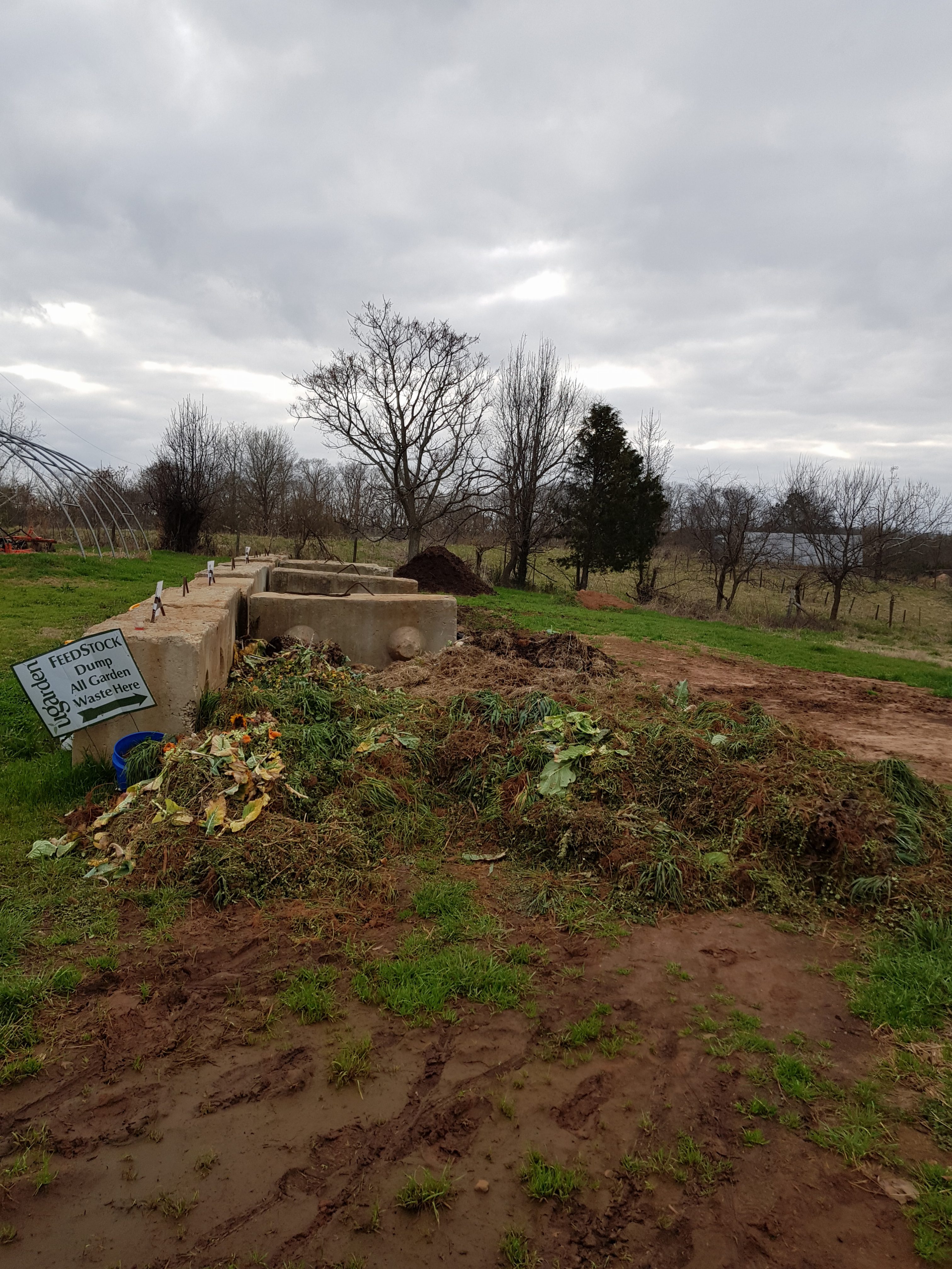
  1. In this picture, you can see UGArden’s compost pile and the barriers they use to divide the various stages.
  2. One of the most striking things about this picture is the size of the compost pile. It’s much more spread out and larger than I initially expected it to be. The pile that can be seen at the front of the photo is only the first step in the composting process. Once the first pile has been churned up and properly composted it moves to the next barrier and stays there for a while.
  3. I think if someone saw this picture, they may be able to recognize it as a compost pile. However, they may not know all the other steps that will be involved in the process. Before visiting, I just assumed that you leave the compost in one large pile like the one seen in the photo. I had no idea it had to be moved around and put in different stages.
  4. When I look at this picture, I feel proud of all the innovation that UGArden has accomplished. Those barriers seen in the photo were once barriers for the Air Force building. Now, they serve as a backboard to help scoop up the compost more easily, as well as prevent rain from running downhill and dampening the compost piles.
  5. I think this picture is about the amount of work and time that really goes into composting. The various stages barricades help show just how many different stages of decomposition a pile of compost must go through before it’s actually ready to be used. It also shows just how many different things can be composted. The pile is full of a wide variety of scraps and plants.

UGArden – Delaney Williams

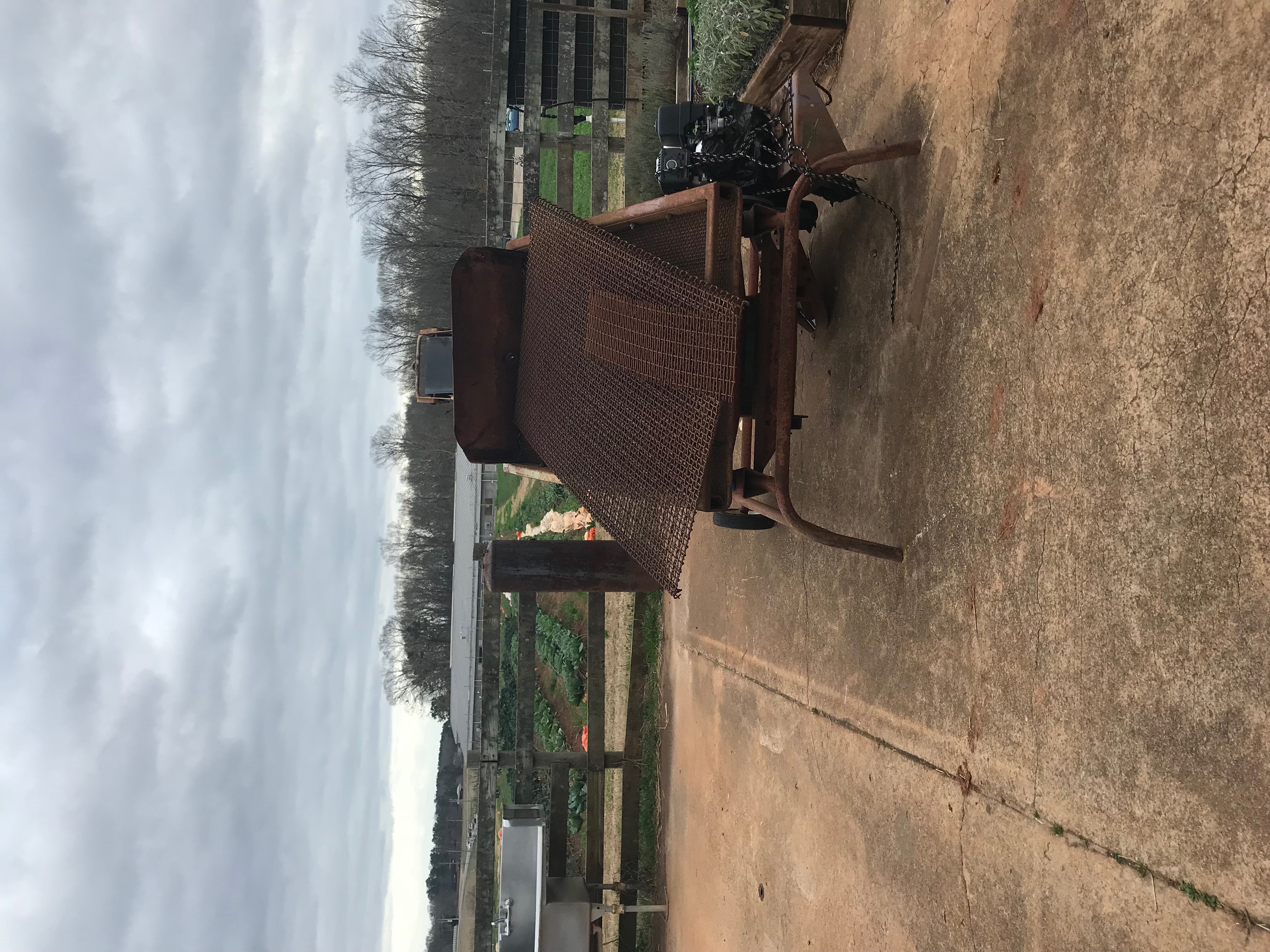
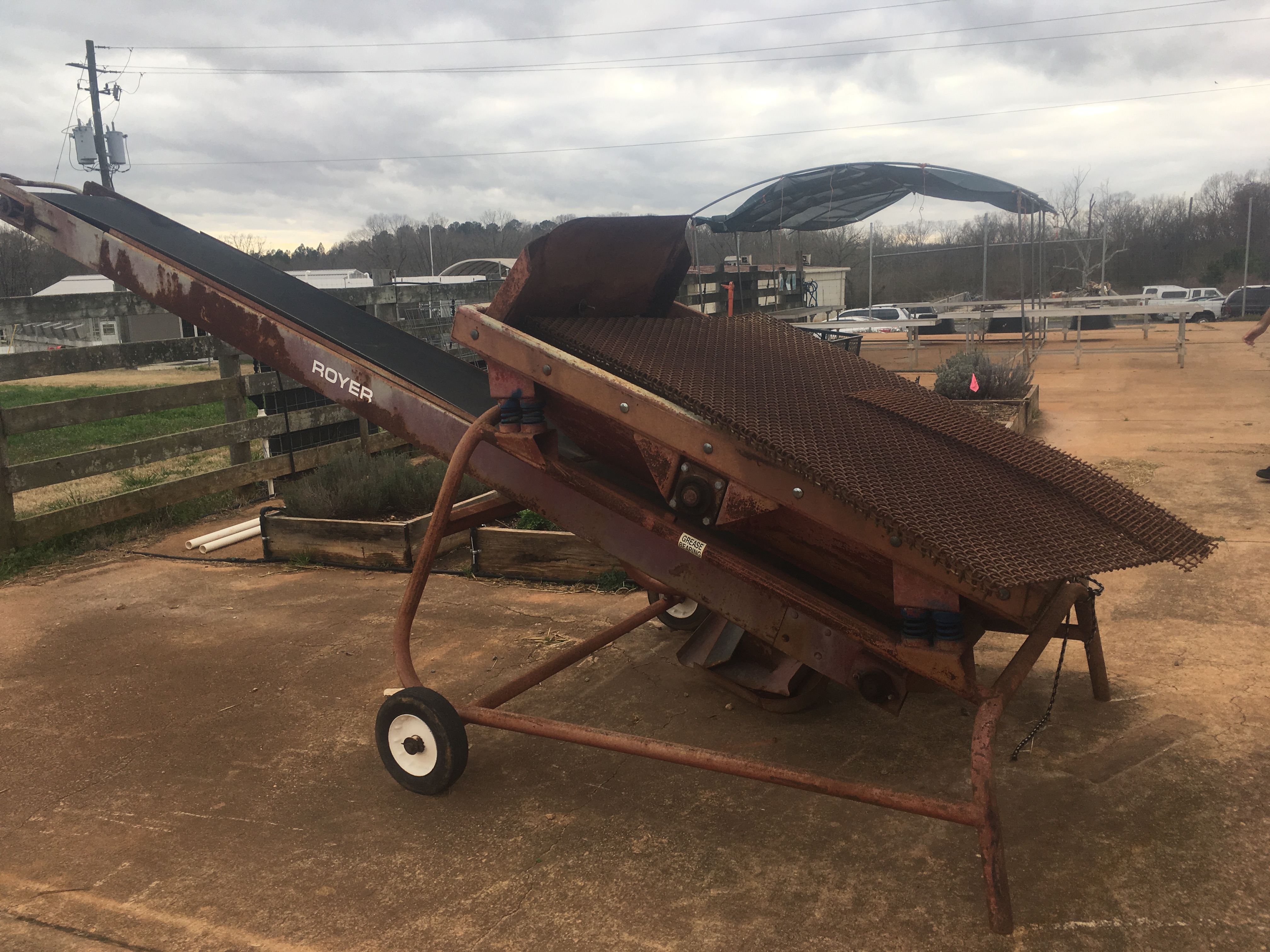
The picture’s focus is on an old compost sifter the has been donated to the UGArden from back when UGA first started it’s composting initiative. Different size screens are perched atop the sifter in preparation for future use. In the background are rows of vegetables, and the mushroom greenhouses sit at the bottom of the hill.

One aspect of the picture that really struck me, and about the farm in general, is how worn and home-made everything on the farm seemed to be. While the professor assured us the sifter was in perfect working condition and seemed overall extremely excited about its possibilities, it was clear that the simple piece of machinery doesn’t compare to the main composting center’s setup. In regards to the composting pile, it is obviously not as professional as the professor would like it to be, but the lack of understanding and funding has not dampened his passion for the subject.

The image makes me wonder about the accessibility of composting on campus would really look like. Even with such a jury-rigged setup, there is a process that must be followed and I wonder if students would really be open to composting. I also wonder what students would see when viewing the sifter, and if they would be interested in going farther than just saying oh there’s a rusted piece of farm equipment.

When I look at the picture, I remember seeing the obvious care and pride that the professor has for the farm. Even though some of the fields seemed a little messy, it was clear that everyone who volunteers at the UGArden holds and obvious pride for the work they are doing and it showed in every aspect of the tour.

I think this picture encompasses what UGArden hopes to achieve on campus. They have found a way to start working towards an environmentally friendly goal utilizing every aspect of the farm that they can, which is absolutely admirable. I also think about how much they could achieve if they were able to spread their message farther, or if they had proper funding.

Overall, I really enjoyed our visit to the UGArden and I might look into volunteering in the near future.

A Sweet Visit to the UGArgen


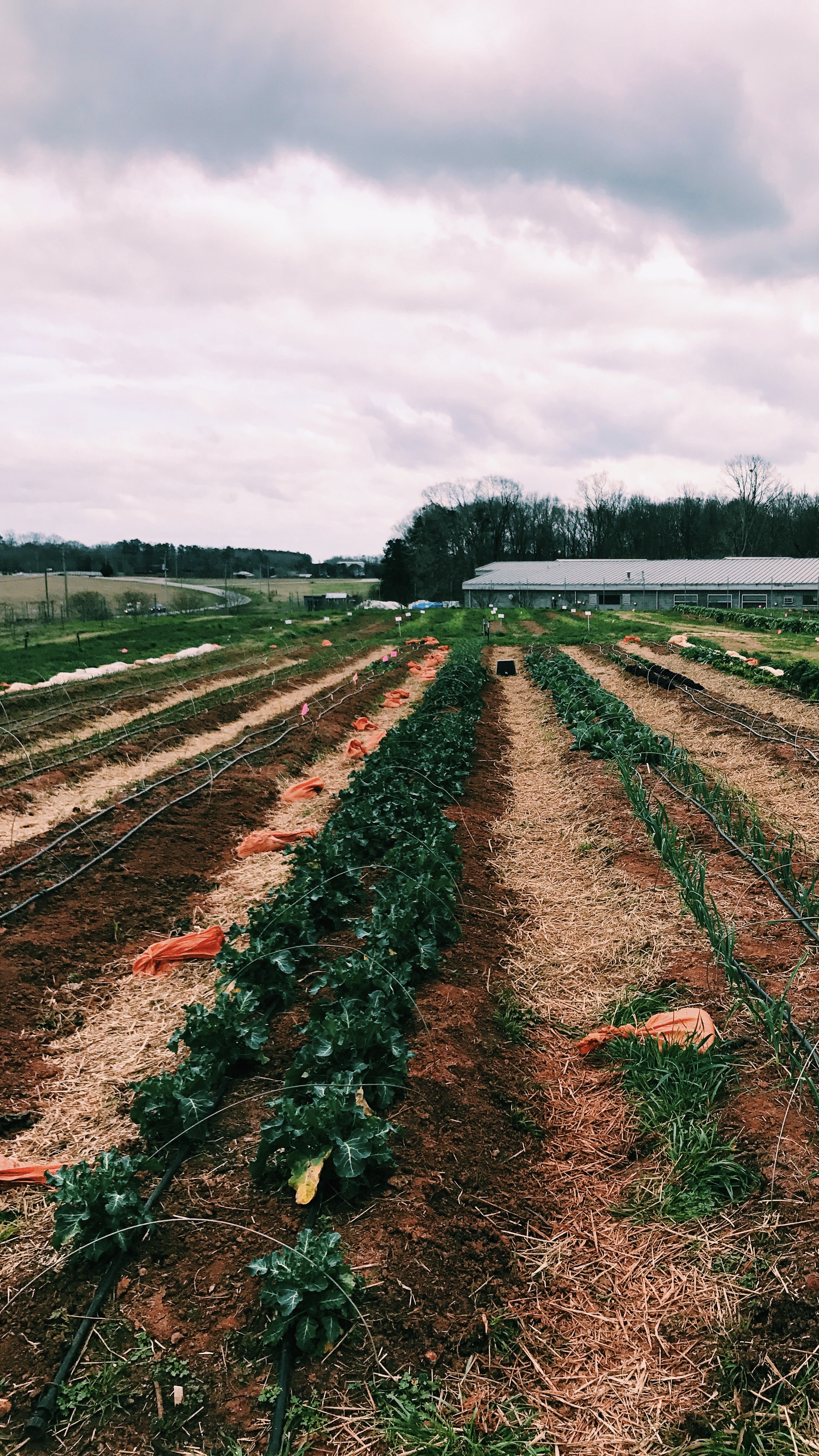
I see many things in this photo of the UGArden. At the most basic level, I see rows of different plants. I see a building behind them that appears to be a green house. I see a windy road to the left that trails off out of site. And I see a cloudy but bright sky. What isn’t captured in this photo is how this day felt. One could simply look up what the weather was like Thursday, February 15th in Athens, but even that could not capture what it was like to be a witness to something much bigger than myself. Perhaps the most important thing that I feel when I look at this picture is life. Life is found in so many aspects of the UGArden. There is life in the many different plants grown. There is (tiny) life in the bacteria that help break down materials and compost soil. There is life in the bugs and animals that surround the area. And there is life in the professor who directs it all. Unfortunately, this picture does not capture just how passionate Professor Berle is for this little pocket of life just off of exit 6. You could tell just by the way he spoke so proudly of the UGArden that he cares about the process. To me, that is what I think of when I look at this picture. I am reminded of what it feels like to hear someone speak so fondly of something they cherish. I am also reminded of the many hours of work that he and the other volunteers must put in to keep this place running (and growing) smoothly. I think of how admirable their work is, and I think of how lucky I was to take a tour to learn about how the garden operates. While this picture may just appear to be a simple image of a garden on the side of the road, it represents something so much more important: sustainability.

UGArden Reflection

  1. This picture is of a rusted compost sifter that was recently donated to the UGArden.
  2. The thing I noticed the most about this compost sifter was how worn down it was. While our guide assured us it was in good working condition and shared his excitement to finally have a sifter at the UGArden, his jealousy at the equipment the University had for their mass composting system was extremely apparent. He compared each aspect of their composting system to the University’s and wished that the UGArden had that much funding and was able to work as efficiently.
  3. When I look at this picture, I feel sad that the UGArden does not get the funding and new equipment that it deserves. The garden works very hard to utilize natural techniques to create large healthy crops without fertilizers and GMOs and they should be provided with equipment that aids them in reaching their goal.
  4. I think when anyone looked at this picture, they would immediately recognize it as some sort of farming equipment. I do not think they would be able to know the object’s function until someone told them what it was, but it clearly appears to have been around for a long time.
  5. I think this picture shows how complicated it is to properly compost. In order to create nutrient-rich soil from organic garbage, one must be careful of the material placed in the mix- the carbon vs nitrogen balance must be correct- the temperature of the pile must be high enough, the area must not be too dry or too wet, and there must be a consistent and meticulous stirring and sifting of the material. Most of all though, the process takes time. Just as the sifter rusts over time, the garbage will eventually change and produce something new- a nutrient rich soil that can replace environment damaging fertilizers.

UGArden Reflection

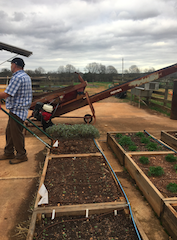
This is a picture of the boss at UGArden holding a broad fork. In the foreground are some raised beds with various plants in them. In the background is an old compost sifter.

One thing I notice in this picture is the raised beds. At my house in Memphis, we have a large garden in which we grow all kinds of vegetables. Quite a few years ago, my dad noticed we were having trouble retaining the good soil that we worked hard to create. We had drainage problems in the area that the garden was, so my dad decided that we would construct raised beds in order to retain and maintain the soil that we created.

This picture makes me think about my summer working on an organic vegetable farm in Tennessee. We would do a lot of the same things that the man in the picture described. We operated on a similar scale as this farm and we grew a lot of the same crops, so we had a lot of the same problems that they have. I think someone would interpret this photo as a man giving a lecture about gardening at first, and that person would be right.

When I look at this picture, I feel happy. It reminds me of working on a garden and using a broad fork to loosen up the soil without tilling. In high school, my friend and I built a high tunnel similar to the one that he showed us and we didn’t have enough resources to buy a tiller, so we used a broad fork to essentially till the soil in between plantings.

I think this picture is about how we can do small things to positively affect the world around us. At UGArden, they are conscious of the impact they have on the environment. Because of this, they do everything they can to be as sustainable as possible, reducing their collective carbon footprint, and leaving the world better than they found it.                     – John Kutteh

UGArden: Promoting Growth by Limiting Moisture

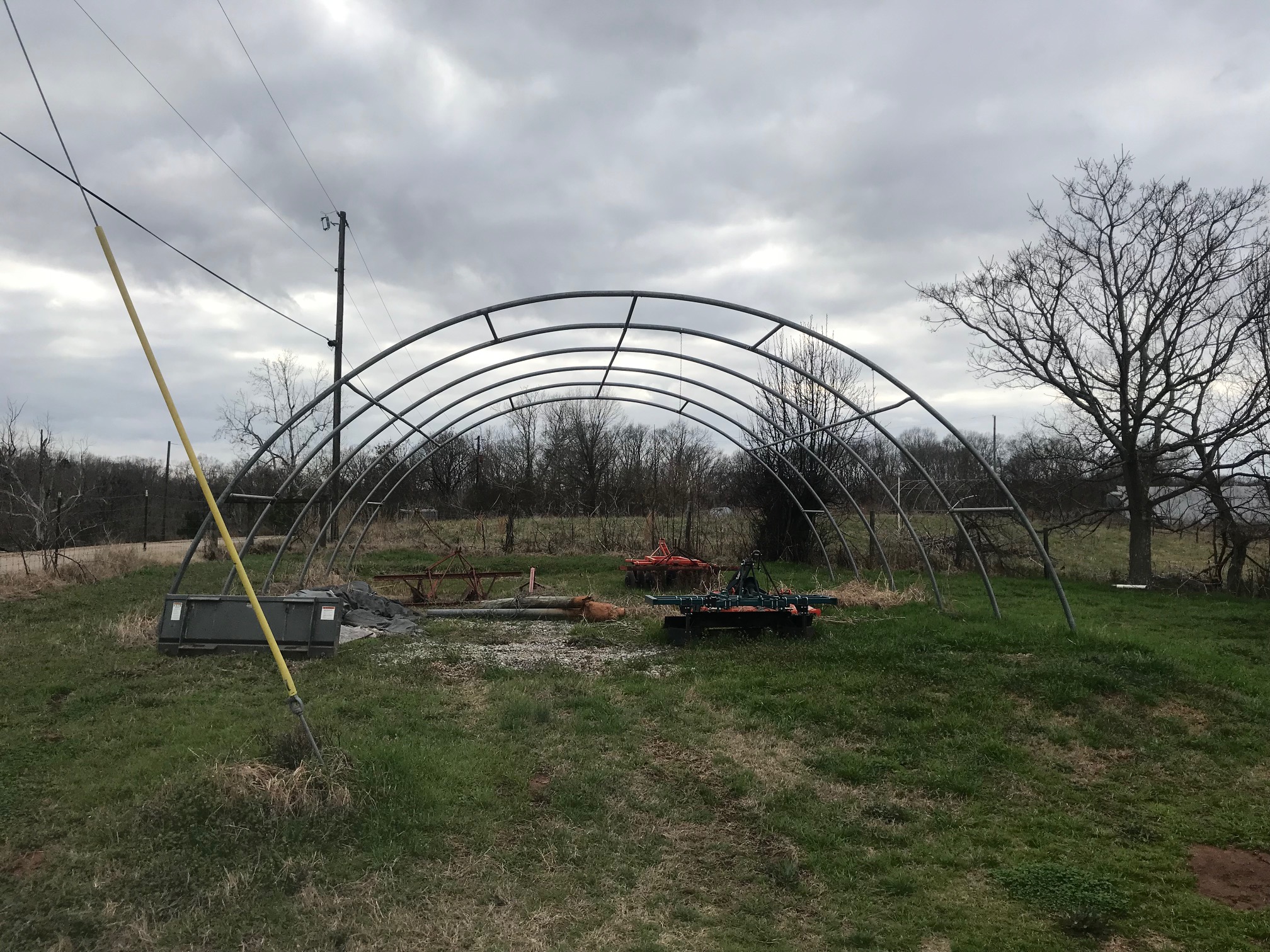
  1. In this picture there is a cloudy sky over dead trees and grass that is green in some spots and dead in others. Power lines stand to the left while some unknown equipment stands underneath the tunnels.
  2. I was surprised first at the lack of visible plant-life. That is to say, the fantasized notion of a garden promises fruits and vegetables that are always visible. Of course that isn’t true and logically I must’ve known that, but the subconscious expectations were subverted.
  3. Initially, looking at this picture, one may see the tunnel as an arch meant to give support to vine-based plants or others that cannot support themselves. I personally thought so on first look, thinking back to a similar arch that leads to my front door at home.
  4. Looking at this picture, I’m surprised at the amount of knowledge that is in the world that I may never know. Within the world of gardening, there is so much scientific knowledge that ranges across many disciplines. Presumably, every field requires such in depth knowledge, which seem daunting.
  5. This picture, I think, shows the disconnect between expectation and reality that many people have when it comes to farming and things they don’t know about in general. The tunnel in the picture is actually used to keep moisture of plants, allowing moisture regulation to prevent the growth of mold and other diseases. To an extent, this is a counterproductive method of gardening, as rain should theoretically promote the most amount of growth!

UGArden – Saloni Gupta

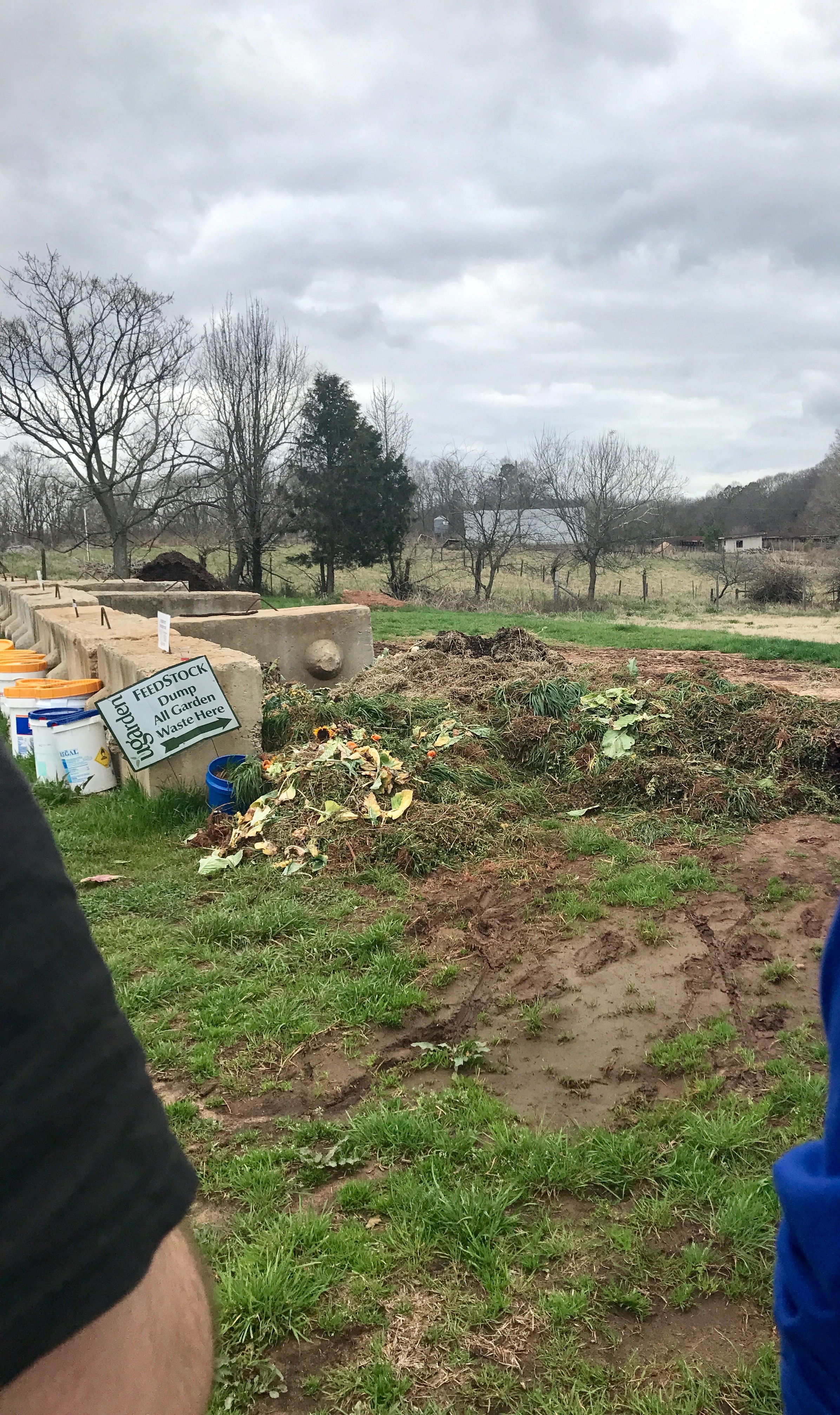
In this picture, at first glance, I see a large, jumbled pile filled with grass cuttings, leaves, orange and banana peels, and a sunflower. However, what I notice is the beginnings of the beneficial natural process of composting. What seems like an ordinary pile is actually being recycled into dark, nutrient-rich productive soil (pictured in the back) which I think is so incredible. This compost pile is productively using raw materials to give back to the soil. It is housing invisible organic matter and beneficial bacteria and putting it all back into the system. Many natural processes take a long time, so; it is kind of mind-boggling to think that the UGArden uses composting to transform a six-month process into a just a few weeks while still contributing to and enriching the soil. This picture makes me think about people taking the environment into their own hands, understanding its needs, and genuinely wanting to help and nourish it. It makes me think about the fresh vegetables and fruits I eat. The reason why I am able to truly enjoy my food and retain the nutrients I need is because the fruits and vegetables are growing in quality rich soil due to composting. It also makes me think about how easy composting can be based on the materials shown in the picture. Since fruits such as oranges and bananas are already part of my regular diet, it is hard to think of an excuse to not put the peels into a composting bin than opt for the trashcan. I think this picture is about hard work, care, and awareness. The people of UGArden have truly put in genuine hard work because they care about the environment. They understand the benefits of composting and the effects it can have on the soil and then later on to the fruits and vegetables we eat to get our nutrients from. It makes people, like me, aware of composting and why it is important to look after the soil and environment since we depend our whole lives on it.

UGArden Reflection

In this picture, I see a collection of food scraps and plant matter that will soon be decomposed and become compost. I also see concrete dividers for the different stages of compost. Lastly, I see a pile of finished compost in the back. I noticed in this picture that there is a long and intricate process for composting.

This picture makes me think about how the UGArden takes composting seriously. Additionally, this picture helps me realize that everyone in the UGArden community cares so much about composting and healthy soil that they all come together and make one collective effort to compost. At first glance, the average person might think that this is just an image of dead crops/waste. They might also think that the compost in the back is just a pile of regular dirt.

When I look at this picture, I feel optimistic for the future of agriculture. I think that if composting started to become the norm everywhere, there would be much more significant yields of crops and healthier soil.

I think that this picture is mostly about the long and complex process of composting, and how a plethora people come together in an effort to ensure that compost is successfully created at UGArden. The fact that composting is a long process is stressed even more by the large pile of compost in the back, which is several years worth of composting.