UGarden Julianna Mallette

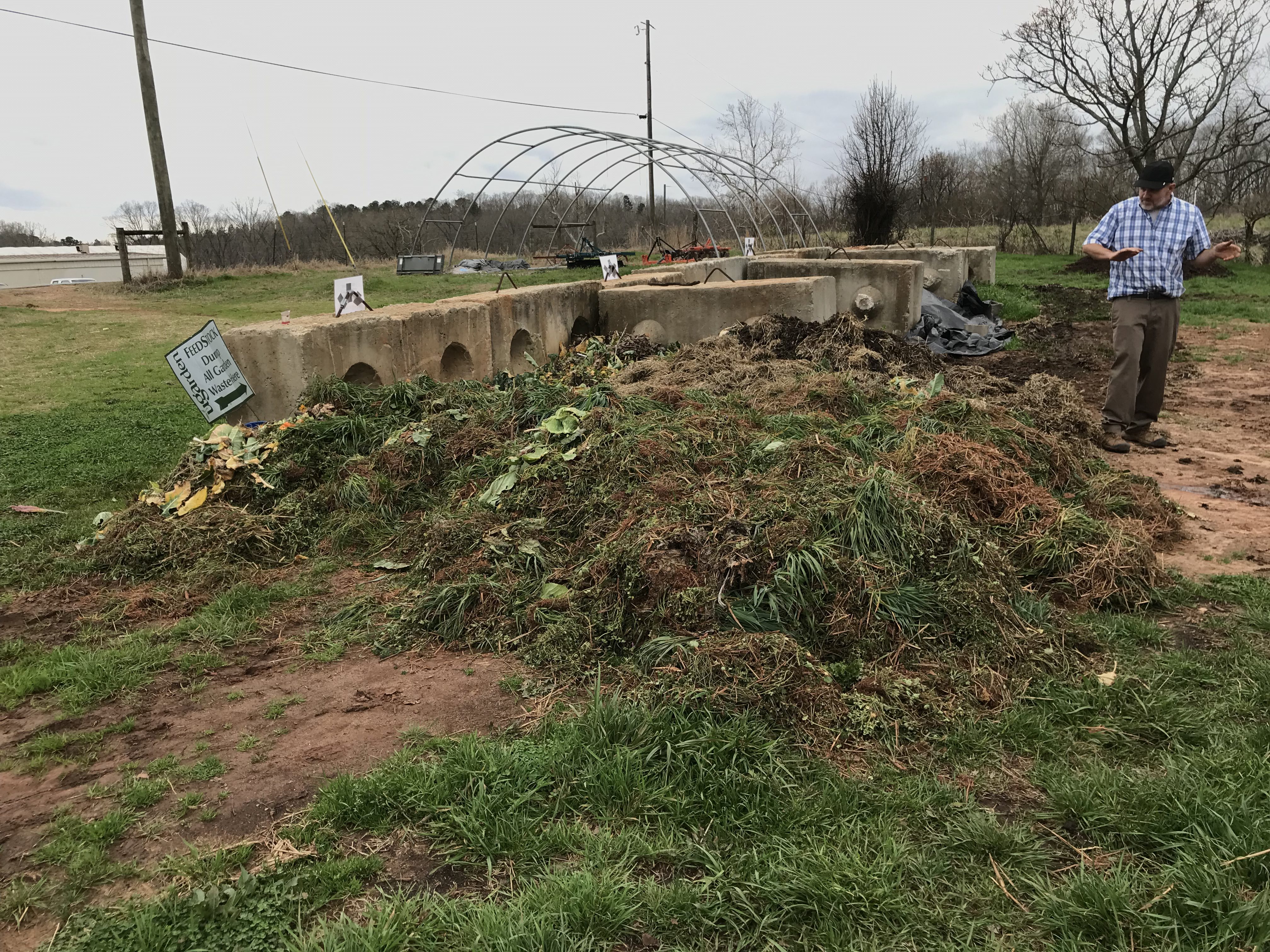
In this picture, I see something that the workers at the UGarden are truly proud of, and rightfully so.

I see a heap of old vegetables and clippings from a garden, but I know that this heap will turn into compost that will benefit the garden itself in the future, and I see nature at work. In the back, you can see the pile of compost that took years in the making, and something that they have worked hard to create and maintain, so that really stuck out to me.

This picture makes me think about my great grandparents’ farm, and how their compost looked so different in comparison. My family didn’t work nearly as hard as the members of UGarden do to care for their compost, so maybe that’s why my family grows timber now, instead. At first glance, I think someone would interpret this as just a heap of trash, but this trash is so important for the environment that they are keeping at the garden.

When I see this picture, I feel good, because I know that someone cares. The man in the picture obviously takes a lot of pride in what they do there, or else why would he want to take the time out of his day to talk to us about it? I feel like this is a progressive step in agriculture.

I think this picture is about what we will see in the future. What is just a green pile now, will become rich and brown, and good for the soil once again. It’s also about the future of farming, and how we can take steps to ensure we are trying our best to replenish the earth that we depend on for all of our food.

UGarden

Unfortunately I was unable to join the UGarden tour, but I really wanted to go. I was very curious if it was more of a garden or more of a farm. After reading through the UGarden site, I now know that it’s a little bit of both. It’s very much a place for students to not only grow organically, but it also encourages experimentation.

I was very touched by their mission statement because they not only plan to learn to grow organically and sustainably, but they also help those who can’t get fresh produce through UGA’s very own Campus Kitchen organization. In addition, some produce goes to local schools for sampling in the cafeterias.

It’s extremely refreshing to see students take initiative and preserve/work on this garden. I think a lot of us could take notes from them since we often don’t think twice about where we get our food.

UGArden Reflection


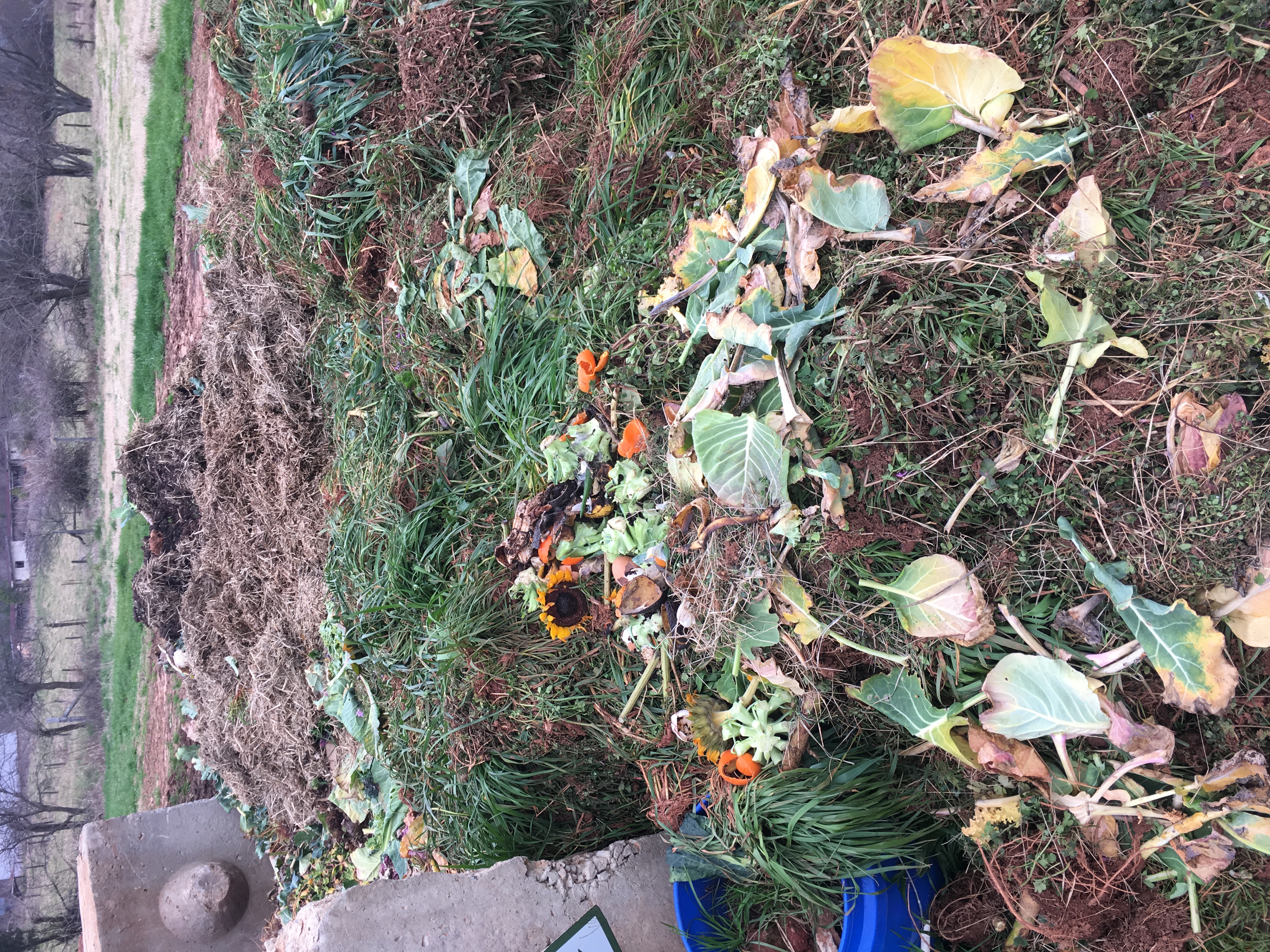
“In this picture I see what every average american sees, a pile of garbage.” This is what I would have said had you asked me the day before our excursion. Today, however, I see something much different. In this photo, I see the future. I see my next meal; the carrots that I munch on at lunch and the lettuce that I put on my sandwich at dinner. What looks like the end of life, in this photo, is in fact just the beginning, thanks to composting. For many, like me, the process and benefits of composting elude us. Yet, when I look at this picture, all I can think about is how much beneficial organic material we throw away everyday. For example, if you look closely, you can see the remains of some orange peel amid the pile. I can only imagine how many banana peels, orange peels, broccoli stems, and other useful material I dump in the trash everyday that is shipped off to a landfill, lost among the pizza boxes and milk cartons. This picture makes me feel lousy knowing how much good material I’ve let waste in these landfills when there was an easy outlet of disposing it right outside my backdoor. This picture is meant as a message. It means to tell us that there is another outlet besides landfills. An outlet that will actually put life back into the earth rather than just taking it away. We need to transform our relationship with earth from a parasitical one to beneficial one.

UGArden Reflection – Greg Gruschow

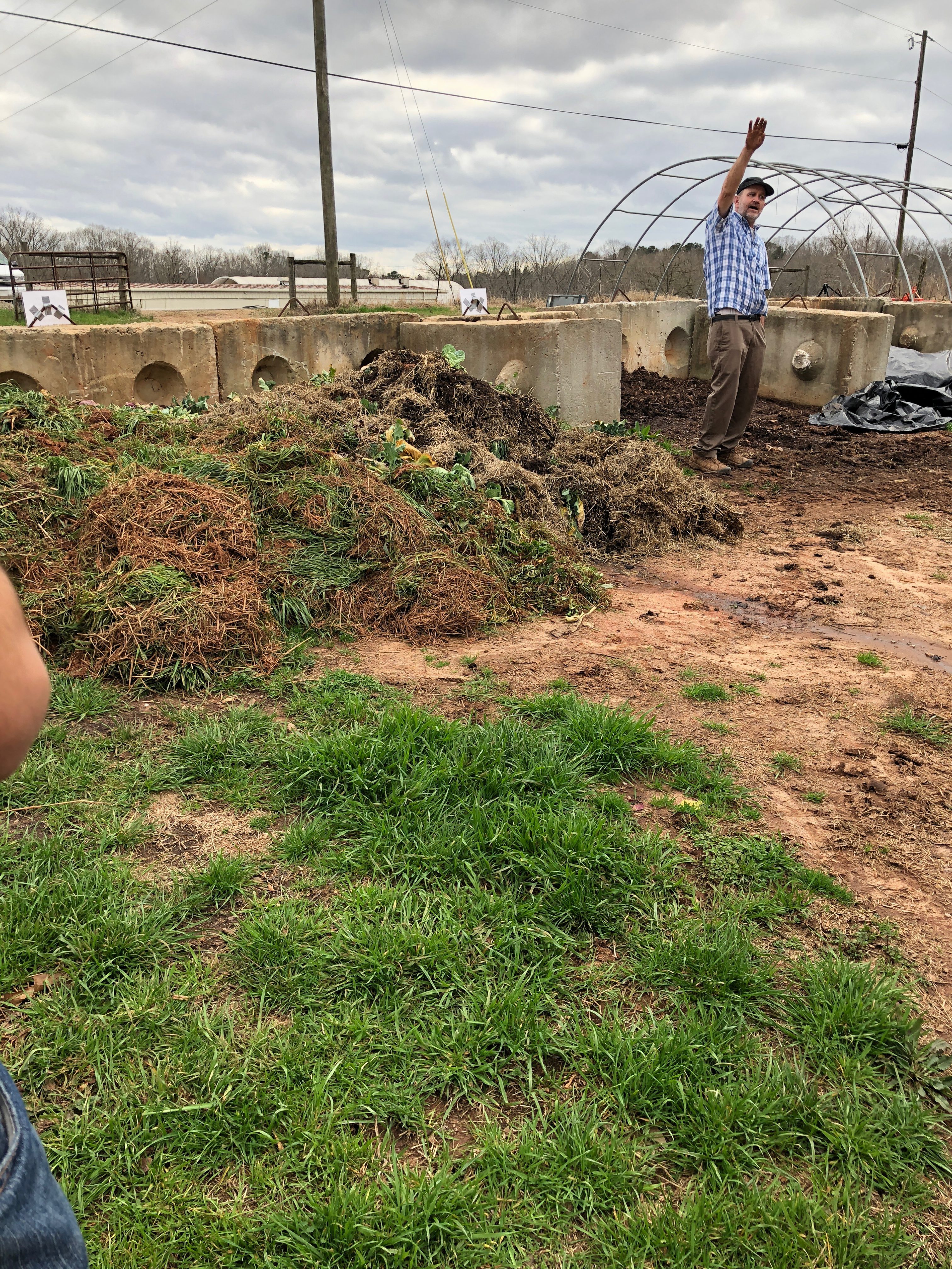
In this picture, I see a pile of compost and one of the gardeners explaining the function of compost. When I look at this picture, I notice how most of it looks like ordinary dirt and grass, with the exception of a couple crops towards the left side of the pile. This picture makes me think about the many methods farmers use to help the environment and be more efficient when growing crops. When I look at this picture, I feel a slight urge to research ways I can help the environment myself. I think this picture is about the many different plants and other things that can go into composting.

UGArden

In this picture, I see a man who is really passionate about soil. And there’s nothing wrong with that–he’s being environmentally conscious by doing so. I think this picture is really cool because it not only captures the compost itself, but also a professor who has spent hours upon hours of his time doing the composting (and best of all, in the middle of explaining the ups and downs of the temperature of said compost). This picture makes me think about one main thing (stay with me on this one): Could you increase the productivity of composting by putting all of your organic material in a blender? That’s what, sadly, I was thinking about throughout the professor’s entire presentation. And to my surprise, he actually answered my wild internal question, albeit indirectly–there was a machine that sliced and diced organic material to speed up the composting process. So, when I look at this picture, I think about the innovations that keep popping up in the agriculture industry. However, I think this particular picture is about something more specific: the determination of one professor to do his part, whether it be turning over the piles of dead leaves via tractor or throwing egg shells into a homemade compost bin away from UGArden. No matter where he is, he tries to make a difference.

UGArden

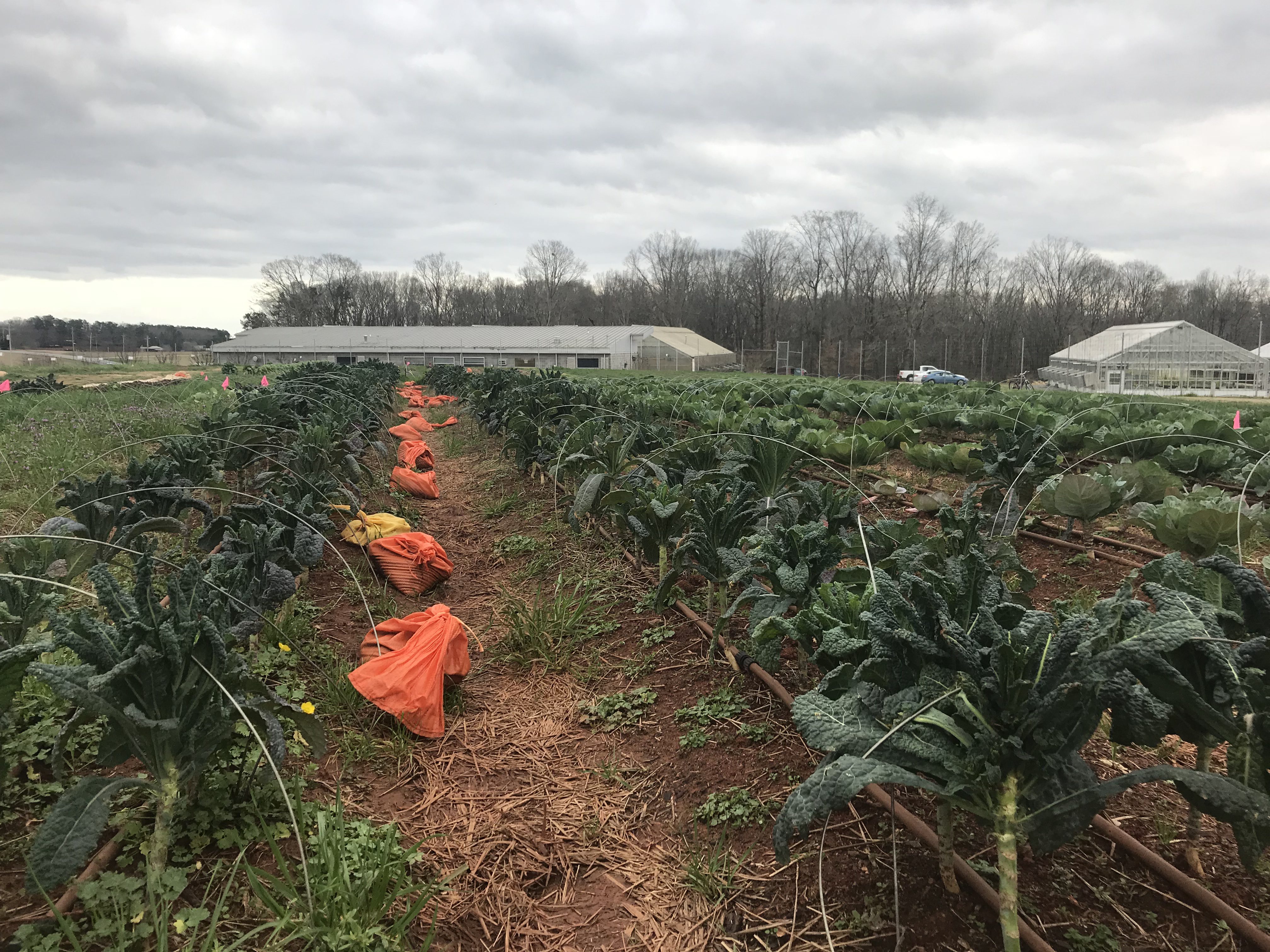
In this picture, I see hard work and care. I loved looking at the rows of vegetables and herbs extending out into the field because I knew there was so much below the surface and behind the scenes. Looking at the crops made me think a lot about where our food comes from and how it is made. Most of the time, our food comes from something frozen, or it has been manipulated in a factory. The vegetables in the photo have only been touched by human hands and exist under the rain, sun, and stars. I was struck with such a contrast of the wholesome life and growth of the produce on the UGArden versus the hormone-injected items that sit under a fluorescent light at the grocery store. When I look down the rows of sprouting green stems of leafy bushes, I think about the volunteers and others who took the time to plant and cultivate that seed to develop the plant before me. Growing anything takes time and care, and that effort was evident at the UGArden. I think people will see this effort as well when they see this image, and I hope they too will contemplate the origins of what we eat and how organic and natural what we eat can be. When I look at this picture, I feel excited about our capacity as cultivators. With a little help and guidance, we can grow our own food and sustain ourselves using the tools of the Earth. Ultimately, I think this picture is about the beautiful manifestations of natural life and how that pertains to us. We can be a part of it and perpetuate it to glean the organic material like that of the UGArden

Introductions – Harina Som

My name is Harina and I am a second year honors student pursuing the dual degree program in Computer Engineering and M.B.A.

  1. I enjoy science, in high school I took AP Physics and AP Chemistry. Then in college I have taken a few more Physics courses required for my engineering degree.  I enjoy Physics the most because to me Physics seems very logical and is a science used to explain life’s phenomenons such as gravity.
  2. From this course, I would like to get a deeper real world understanding of Biology because the last Biology class I took was honors bio in 9th grade, I have never taken a higher level bio class. Biology was always the science that challenged me the most. Being an engineer, I like to see the logical process when I am learning something which I was not able to see with bio. So through this class I want to get a logical understanding of the subject.
  3. I would ask questions centered around why and how. Such as why are there antibiotics in soil, how does this happen. I believe this will help me get a logical understanding.
  4. I believe students these days like to think about the big picture and how a little thing makes a big difference. So I believe students will want to know how these antibiotics found in soil can help save people and make a positive impact on the world.
  5. I believe I will learn how one persons service can have such a big impact. Then this will lead me to continue to take part in service projects and by others seeing the difference my service is making, they will join in as well.

Hey, I’m Sarah Kate! – Blog Post #1

Hello! My name is Sarah Kate Brewer. I like to play my clarinet in the Redcoat Marching band, and I do NOT like the University of Alabama football team! GO DAWGS!

This introductory biology course will be my first science course at UGA. In high school, I did not take many advanced science classes. I took a physical science class, a chemistry class, an anatomy class, and a biology class. Of these classes, I distinctly remember that while the biology class was the most challenging, it was also my favorite. My teacher was extremely passionate about life sciences and sustainability, and I really enjoyed how enthusiastic she was about having class discussions on hot-topic issues. Because there is a lot of controversy and political/financial debate about certain biological subjects, I really enjoyed learning more about these issues so that way I could engage in these discussions.

I hope that by the end of this semester, I will be able to engage in the global conversation of sustainability. I would also like to contribute confidently in these discussions and help work towards saving our planet. I think I will be able to achieve these things by retaining the information I learn in class.

I would like to know more information about how these antibiotics in the soil are harmful. As a student, I would like to learn more about the biological processes that happen in the soil and how the antibiotics affect these processes.

I think the issues that might appeal most to my fellow students are the financial issues that would arise by promoting composting and sustainability. Specifically, it might interest my fellow students to learn about how these sustainable projects can be funded properly. I believe these financial issues would be most important to them because I believe we have a lot of prospective Terry College graduates in this class.

Something that I might expect to learn from the service learning experience is just how much the community knows or does not know about composting and sustainability. I would be interested to see what the community’s idea of sustainability is and whether or not it seems to be an important issue to them.

Introduction

I’m Sahir, a sophomore doing computer science as his major. I’ve always enjoyed science as a topic. My earliest interest in science started when I was only six or seven years old, starting with a fascination with outer space. One of my earliest memories from that age was hearing about Pluto’s declassification as a planet — something that I remember really bothered me at the time! My mom is a doctor, so I guess I should be inclined to be a doctor as well. However, I’ve seen the amount of effort she has to put into her work, and given how much of the medical profession seems to be testing and bookkeeping, I firmly decided long ago that I was not going to be a doctor.

In school, I always enjoyed our science classes. Up until ninth grade, we had general science classes (except perhaps Life Science in seventh grade), but in high school we had more specific subjects. I took biology as a freshman, physical science as a sophomore, chemistry and human anatomy as a junior, and AP Biology as a senior. Out of all of them, I enjoyed chemistry and the early stages of biology the most. I say “early stages of biology” because in our biology classes, my favorite parts of biology (cellular biology, genetics, and evolution) were covered at the beginning of the semester. I have mixed feelings about ecology and a particular dislike for plant biology — the latter because I feel like plant biology always ends up being a long discussion about pine cones and tree trunks, which feel like low points compared to viruses and DNA.

In all honesty, I wasn’t sure what I expected to get out of this course when I walked in about an hour ago. It felt like I was simply fulfilling one of my degree requirements, walking in because I have to — and hey, as long as we weren’t spending the entire semester talking about legumes, I might just enjoy myself. But after being introduced to what we’re actually doing, I think this class is going to be a lot more enjoyable than I initially thought. I like that it’s going to be interactive and doesn’t look like it revolves entirely around reading and note-taking. So I suppose what I hope to get out of this course is everything it can offer, for me to involve myself in it fully and have some fun with biology on a more active level.

As far as composting is concerned, I think what I’d like to learn more about is how the green bins work, and how composting can be incorporated in a community’s culture. My parents live in Phoenix and have a green bin there, but their bin is for recycling plastic bottles and paper — which is what I always thought the green bin was for! In Reed Hall, we have a recycling bin for cardboard and paper, but there’s a notice above it specifically asking students to throw food items into the catch-all trash can. Should we perhaps be looking to correct that, so that students are also encouraged to compost? That could make a huge difference, especially in the big dorms like Russell and Creswell Halls.

I think this topic could also apply to my classmates, as I’m sure that most people would be much more interested in recycling, composting, and generally going green if it were made easily accessible. What if there was a compost bin in the Bulldog Café, and people could throw out their food waste and their cardboard and paper separately? I’m sure that would make a big difference.

I’ve sometimes considered doing something politically related as a career option. If I ever do do something like that, I’m sure that I would have a strong position on the environment and on being eco-friendly in general. I hope that when we do our outreach,  I can learn a lot about explaining why we need to be more environmentally conscious.
Introduction – Saloni Gupta

  1. In high school, I took biology, chemistry, and physics. So far in college, I have taken Physics 1 and Physics 2. I liked physics the most because it was very math based.
  2. I would like to get an informative biology foundation and am looking forward to learning about the properties of soil and its necessary tie with the environment. I have always wanted to help the environment but felt like I didn’t quite understand all the key aspects or most beneficial ways of doing so, so I am excited to get this knowledge through the visits to the watershed.
  3. I am interested in the Outreach program at Clarke Central High School. It will be interesting to work with the students and researching the bacteria since this is a major issue found in our streams. This is also something I have never done before, so I am looking forward to this!
  4. I think issues about how all this can affect our future will appeal to students. A lot of times it is easy to overlook things like the soil and its future importance in the moment, however, when put into perspective on how it can affect our life 40-50 years from now, it becomes more impactful.
  5. With helping with this service learning project I think It will be eye-opening to see the issues of bacteria in our streams. With the knowledge I have gained I hope to be able to motivate people around me in understanding and helping with the issues. I also hope to better communicate the issues with my peers as well and together we can make help preserve the environment.