Infographic

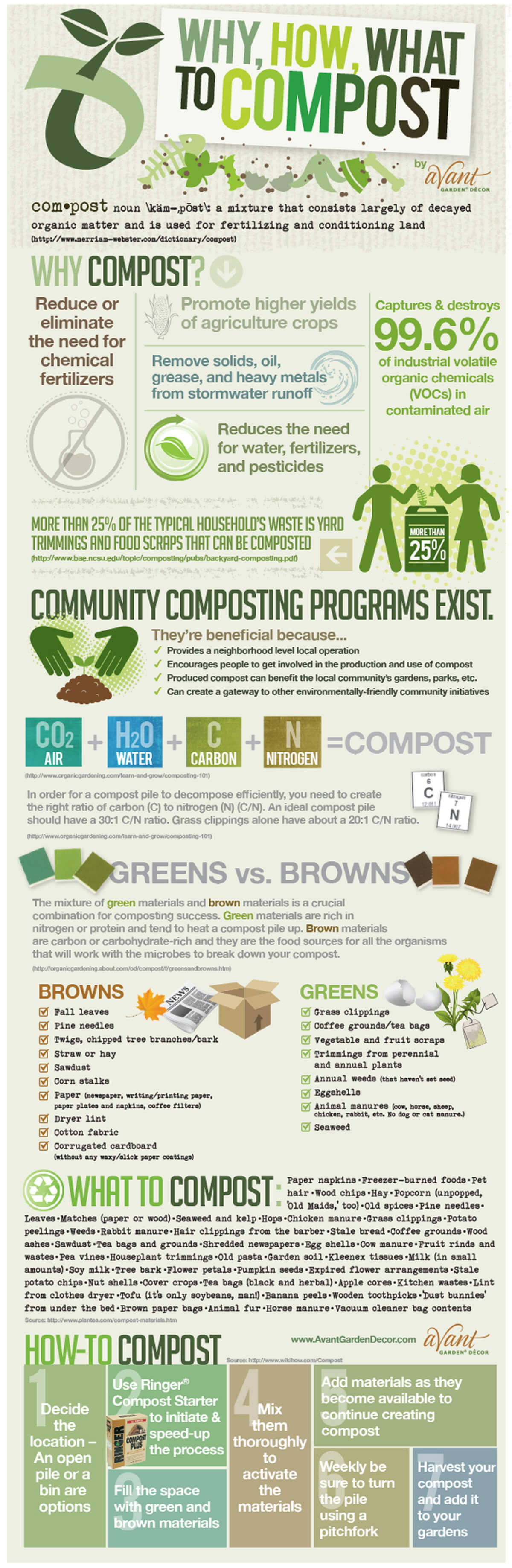
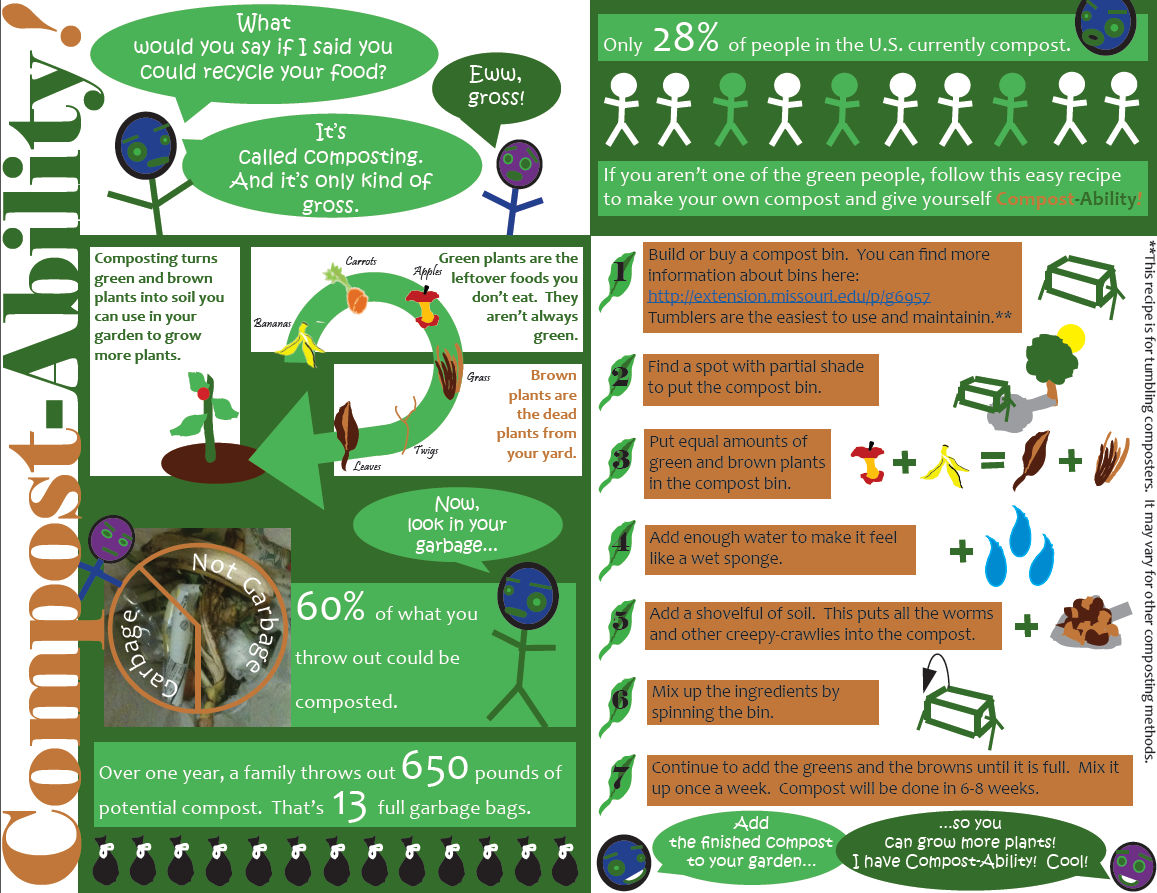
This infographic accomplishes two goals simultaneously. Through its creative name and sectioned design, the infographic provides information both about why composting is important and how you can do it. The statistics provided on the left side of the page are interesting as well as intellectually stimulating because those numbers prompt reflective thought about our own habits and contributions to the issue of waste management. The right side is relevant to the audience because the target audience of this infographic likely does not know how to compost, so providing a brief how-to in the infographic is helpful and appropriate. For someone unfamiliar with composting, these statistics would definitely be jarring. Personally, having learned of the drastic consequences of not composting, this information did not surprise me. This creator is assuming a perspective of our ability to help on an individual level. The stick figures chatting and the use of the word “you” incorporate the audience as having a direct role in the process of composting or not composting. I think this infographic is particularly effective because it combines the information about composting as well as shows how you can do it, something I would not have thought to do. The sources of data are mainly statistics about what percent of what we throw out is compostable versus non-compostable, and this data along with other interesting statistics could be found online. For students, I feel it is important to consider the balance of information with the aesthetic of the infographic. Too much information makes it hard to read, but too many pictures or a complicated design subdues the infographic to a passing image on the wall. I think the pictures on this infographic are well-chosen, but some of them are very small or placed in locations where they are less emphatic or not noticed. Perhaps this thought is neglected in the creation of other infographics because the main point of an infographic is to inform. This infographic, to me, is a good inspiration because it doubles down on information about composting and is informative as well as instructive.
Infographic – Sarah Kate Brewer

CompostInfographic02

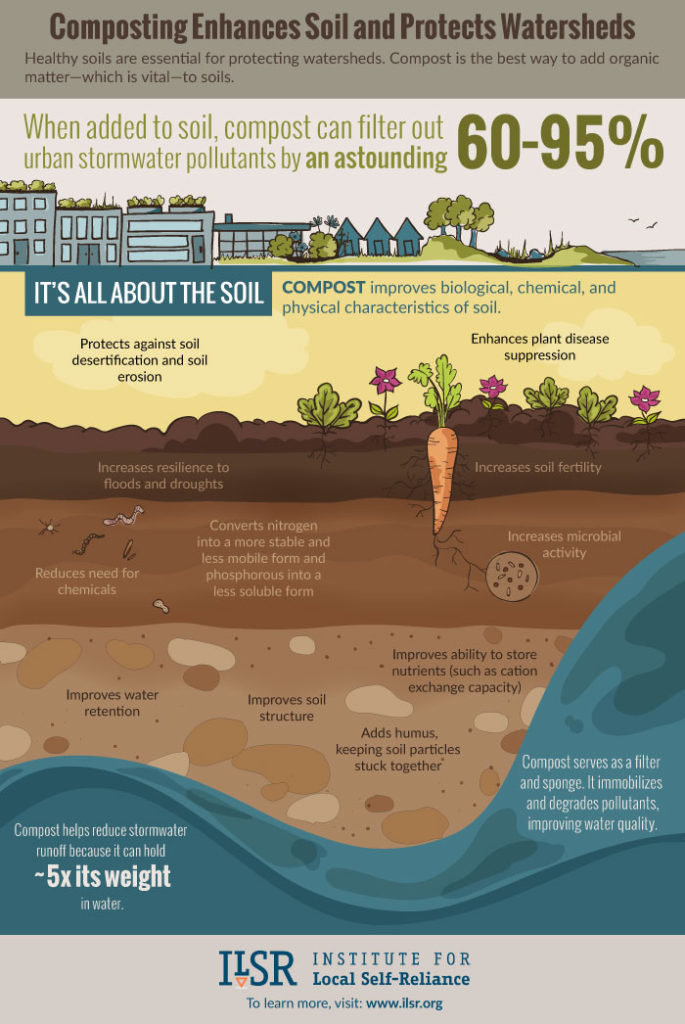
I chose this infographic because I think it is extremely educational in an eye-catching way! This infographic is designed in a creative way because it points out specific details about how compost is beneficial to the soil and watersheds by placing the facts in the different layers of soil. It is intellectually stimulating in the same way because as the audience reads each advantage to composting, they can see where the benefit might help specifically in the soil. For example, in the deeper layer of soil, the infographic tells us that composting can increase microbial activity. This would not happen at the surface of the soil, so the designer chose to place this fact where it was relevant – within the soil. This infographic is also relevant to the audience because not only are they learning what the benefits to composting are, they are learning more specifically where these chemical and physical changes are happening. The audience can know what to look for in their own garden with the information in this infographic!

My initial reaction to this infographic was that I was surprised. I like how this infographic ties together what we have been learning about all semester. We first began the semester by exploring the watersheds in Athens. Now that our next unit is about soil and composting, it is really fascinating to see how the two areas of biology go hand in hand! This was something I had not considered before. Though we have had many discussions in class about the two processes (watershed systems and composting systems), I kept them in separate categories in my head. I think the creator of this infographic was hoping to put the necessity for composting into perspective for his/her audience. Not only does composting increase the quality of the soil, but this effect can lead to sustainability with other aspects of the Earth, too! Because the soil is rich, it can hold more water and reduce stormwater runoff that pollutes our environments.

This infographic was made from the information provided by the Institute for Local Self-Reliance organization. As a class, it is important to use information that we not only find relevant, but accurate. We should be looking at credible materials that we can trust. For the infographics we make for UGA students, I believe we should look specifically at research that has been done about composting in Georgia specifically or in areas with a similar climate and quality of soil. Furthermore, I think this infographic leaves out one key aspect that we should include in our class infographics that we create. This infographic does not include a guide on how to get started with composting. It also does not give any information on the best way to compost or where to find this information should you want to start composting in your garden. I believe educating students about how to compost safely and effectively should be one of our main focuses when creating infographics. I look forward to what we will make together as a class! – Sarah Kate

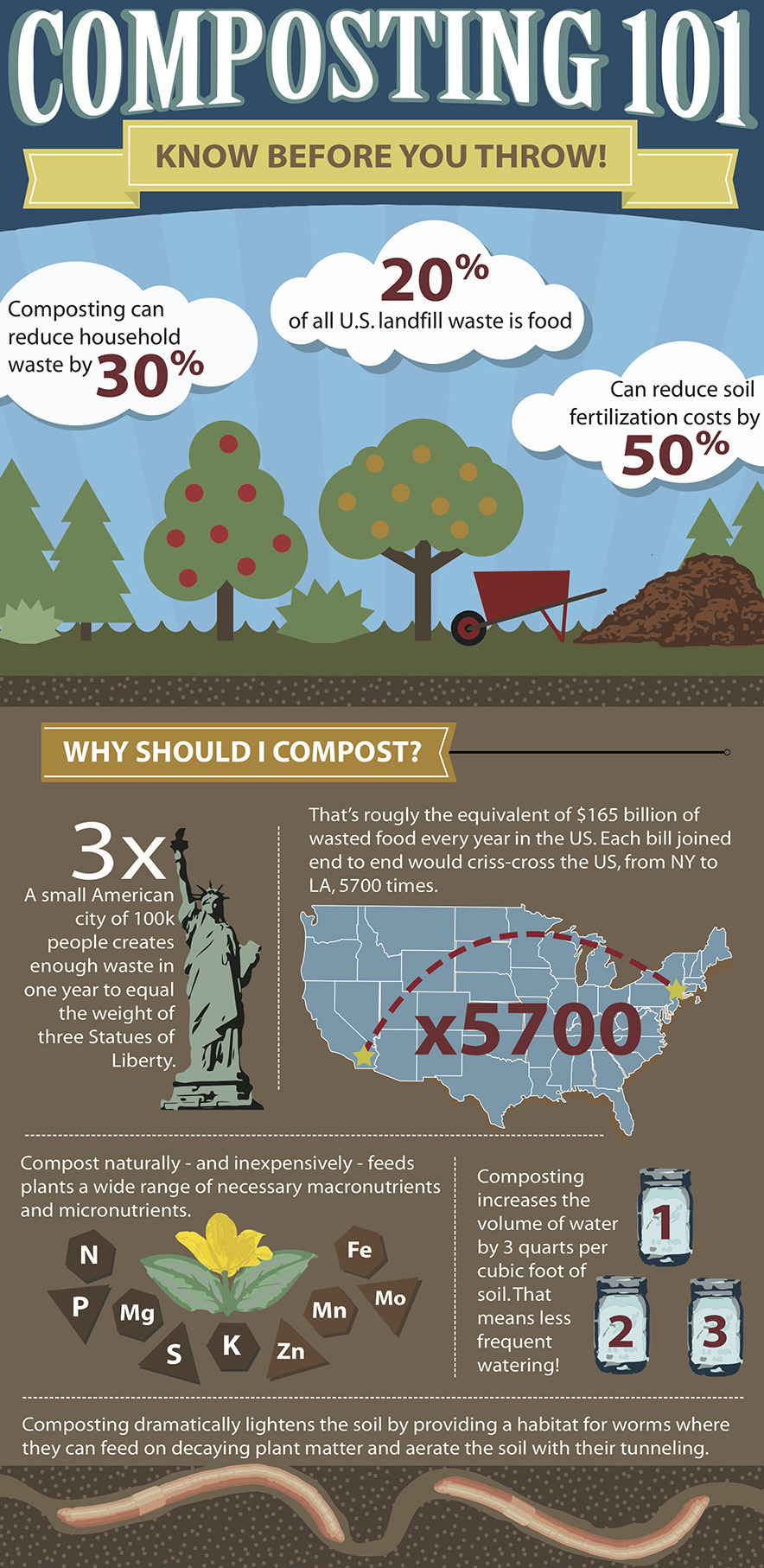
Infographic- Why Should We Compost?

  • WHAT: This infographic is intellectually stimulating in the way that it presents the benefits of composting. For me, the information about how composted soil retains water better made me think about how we could use compost to aid agricultural regions- such as California- that are experiencing drought. I had not thought about benefits of composting past adding fertile nutrition to soil and reduction of waste so this new benefit was intriguing and stimulating. It took the facts and spun it in a creative way that was relatable to its audience. It put the amount of waste created by American cities in terms of the weight of the Statue of Liberty. This effectively makes the audience think “oh WOW really?” and become more open to what the infographic is saying.
  • GUT: I was surprised by many of the facts about household waste in America. We are truly ruining the environment at a horrifyingly quick pace.
  • SO WHAT: I had never thought about how composting might make the soil able to retain water better and how less watering accompanied with lower fertilization costs could reduce agricultural costs. This would give motivation for farmers to actively compost. The author of the infographic was definitely trying to inspire people to compost by showing them the amount of waste Americans create and how this waste could create positive effects if composted.
  • NOW WHAT: I think our infographic should also include shocking facts put in a relatable way (i.e. no percents that can often be conceptual to the average person. Instead, it should take the data and put it in terms of something people can easily call to mind.) However, this infographic does not properly show the negative effects that result from food rotting in landfills. This information is vital to understanding why composting is necessary rather than just something that would be nice if it happened. Our infographic should show how much waste Americans create, how terrible rotting food waste is for the environment, and then show composting as a necessary step in order to slow down the rate of global warming.

Allaina Siler Composting Infographic


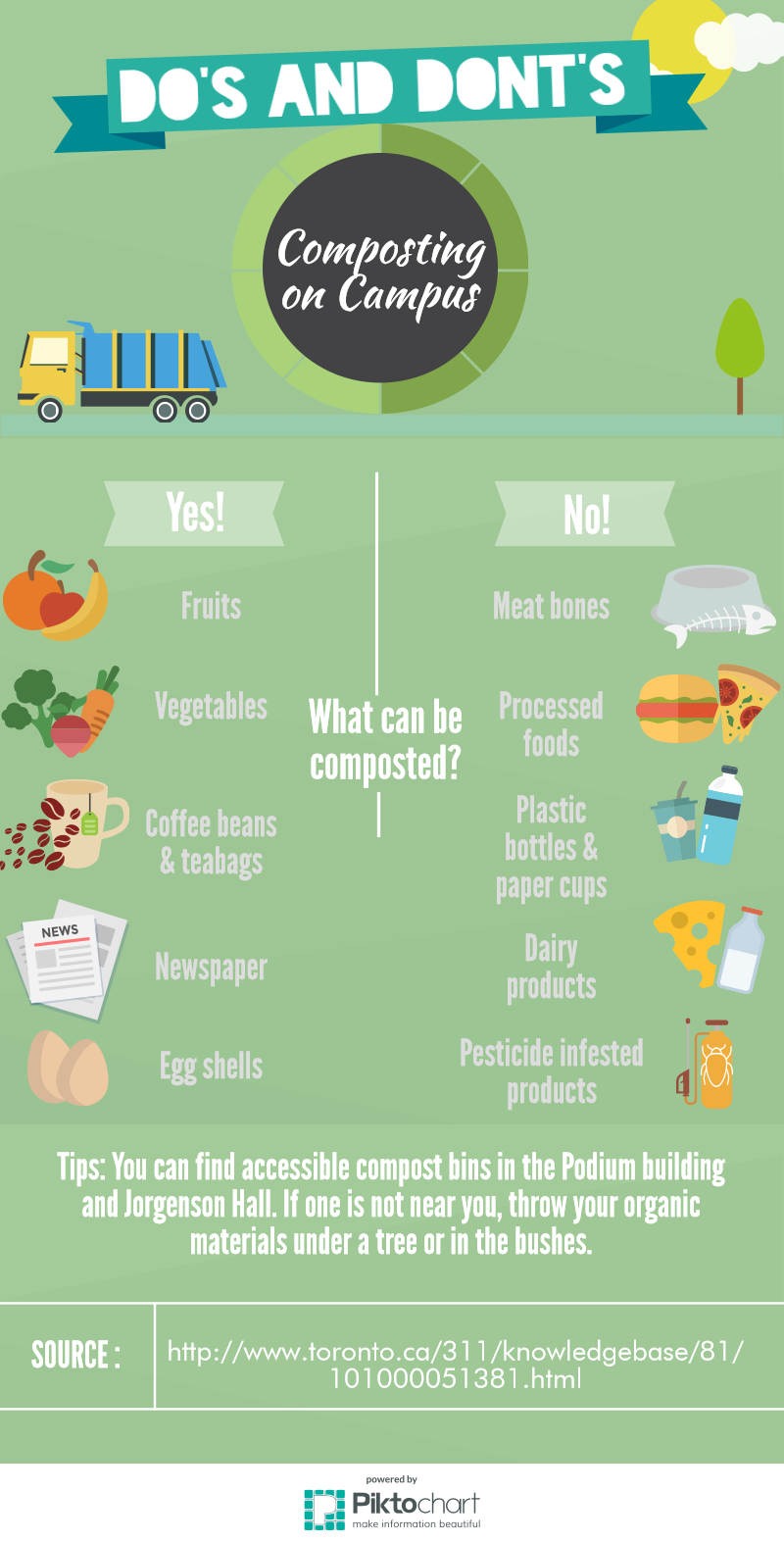
Regarding the three characteristics of effective informative delivery, the infographic is intellectually stimulating because it makes you think about what you can and cannot compost. It causes the viewer to contemplate what materials they have on the infographic at home, and whether or not they belong. As for being relevant to the audience, it would be perfect for the Rooker Hall demographic because the information is specifically tailored for people on campus in a dorm. And, I think it’s creative with its use of the neutral, mellow color scheme, as well as the cute illustrated items that either can or can’t be composted. Also, the three fonts work well together from a design standpoint and would be perfect and easy to read.

As for my gut emotional responses, I was immediately content because it is just so well illustrated and I love the mellow green background with the illustrations of food and other materials. It surprised me that newspaper is compostable because I thought the inks would have chemicals that might be harmful, but I guess not. Nothing angered or frustrated me because this infographic was carefully and thoughtfully made. And, the information didn’t deal with something upsetting like the news.

Before this infographic and this unit, although I barely knew anything about composting, I didn’t think that people would attempt to put plastic materials or processed food into compost piles. I suppose it makes sense with the plastic materials if the theoretical person confused recycling and composting, but I would never think to compost pizza just because I before assumed only fruits and vegetables could be composted. From the infographic, the creator was probably just hoping that the people on campus would gain a new perspective on what they could or couldn’t compost. To find this data, they used one source which is a Toronto informative website with information about what can and cannot be composted. We might engage in finding this data by just copying and pasting the information into a search bar, since they provided the source on the poster.

Although this compost infographic is very successful from a design and informative standpoint, I think maybe they could’ve considered a bit on why the demographic can’t compost certain things. However, it makes sense that they haven’t thought of including this in case there would be too much information that the viewer would not want to read and possibly walk away from the sight of too many words. We can definitely use this as an inspiration for our graphic with the layout of the work because the information is so clearly displayed. Not to mention, we can kind of copy the illustrations (still changing some aspects) for the images of the things that can and can’t be composted.

Bio Infographic

What: This is infographic is intellectually stimulating almost the entire way through. To begin with it starts out by pointing out the agricultural and biological advantages of composting along with some helpful statistics. It goes on to display the chemical composition of compost and discusses the chemistry behind the necessary factor of creating the right ratio of carbon to nitrogen in order to create the ideal conditions for compost. The infographic also establishes its relevancy to the audience by addressing common households personally by including them in the statistics. It also addresses the audience when it discusses the convenience of community composting programs and their benefits and when it explains a step-by-step how-to compost for beginners. Through this, the infographic is targeting the average family household. The infographic is both creative in its design and information. The small pictures and overall structure of the pamphlet makes it an interesting read that is easy to follow. In order to make the information creative, the author includes some interesting statistics and not only explains what compost is but also tells the reader exactly what they can do to be a part of this green movement.


Gut: I was very pleased with the infographic as a whole. The creator did an excellent job of hitting on all the major aspects that someone new to composting would inquire about. In doing so, the creator has made it more likely that the person reading this will feel both confident and motivated to take the next step in composting themselves. The structure of the infographic flowed very nicely all the way from why should we compost to how to compost yourself. It’s good that the reader can just about get all of the necessary information that they need just from this infographic alone.


So What: The part of this infographic that I had not thought about before was the segment in which the creator addresses the existence of community composting programs. This is extremely helpful for someone who is new to the process altogether. The idea that composting could be a community process rather than an individual one will make people more likely to participate. The individual will usually follow the herd. I believe that the creator wanted the reader to understand that composting itself isn’t a tough habit to start. The how-to is simple and short and can makes the task seem a little less daunting and laborious. He also seeks to display how beneficial composting is not only to farmers but society as a whole.


Now What: Although this infographic is extremely well made, I feel that we would need something a little more shocking in order to convince young adults. Since the earth’s well-being is the last thing on a college student’s mind, we would need to include facts or statistics that would be sure to grab their attention. Students would only be pushed to really care if they were aware that these composting and its benefits have a major effect on their lives in some startling way. Including some information on how composting can actually save you money in some way would also be helpful, because college students will do anything to save a buck.

Infographic – Saloni Gupta

I was not able to get a clear copy of the infographic, so please go to https://ilsr.org/compost-impacts/ to get a better reading.

What: This infographic is intellectually stimulating. After a brief explanation of what composting is and consists of, the reader is immediately taken to a simple yet powerful picture of a garbage bag with one side looking gray and the other side with contents of what most people would actually throw into the bag. This is a compelling image because it also attaches percentages to what can be composted in regards to what gets thrown into a trash bag, coming to a conclusion that more than 50% of what is thrown in a trash bag can most likely be composted instead. This picture makes the idea of composting more relevant to the audience because it literally depicts that composting does not require out-of-the-way materials, but instead materials which are getting thrown away on a regular basis. This infographic is also creative in that it does not only describe how composting can obviously help the environment, but it also appeals to those who may not be so interested in the environment by incorporating how composting can help the economy by creating jobs. This way, the infographic serves the purpose as being informative and attractive to all kinds of people.

Gut: I was quite pleased with this infographic. I felt like this was a well-rounded graphic which organized the material in an easy-to-follow way. While most people know that composting is beneficial to the environment, I really liked how this infographic dived into the specifics of how composting can legitimately improve the environment. It explains the benefits to the soil by literally going through the different levels of the soil and inserting the positives. The graphic also states the harms of food scraps to the climate and then immediately turns the mood around when depicting what happens to the climate if food scraps are converted into compost. This infographic really succeeds in the job of not just telling but also showing.

So What: While I knew that composting is beneficial to the environment, also as mentioned in the infographic, the graphic also includes information on how it can directly impact a person’s professional life. The infographic displays information on how composting can create jobs. This is a factor of composting I had not considered before, but it is definitely an important one.  By including this bit of information, I feel like the creator was trying to depict to the audience the importance of composting outside of the environment. This allows for the infographic and the concept of composting to appeal to people who may not be so environmentally mindful. After following through the sources listed, it seems as though the statistics in regards to the number of increased jobs is coming from their own website, Institute for Local Self-Reliance and press-release. As far as how we might be able to find this information also can be through specific searches on the internet, as the creator of this infographic did when wanting to describe the increase in jobs through composting.

Now What: Even though this is a great infographic, I wished it had expanded more on what people can do to compost. The last bit suggests on policies people can consider, however it does not mention legitimately how people can compost. A reason why they may have left this out might be because they were trying to appeal to people working at the local and state levels who can implement policies to encourage composting. We can use this as inspiration for the graphic that we create by making sure that while we still include the benefits to composting, we should also include how composting can be achieved for a common being without it becoming too complicated.

Composting Infographic – Harina Somasundaram

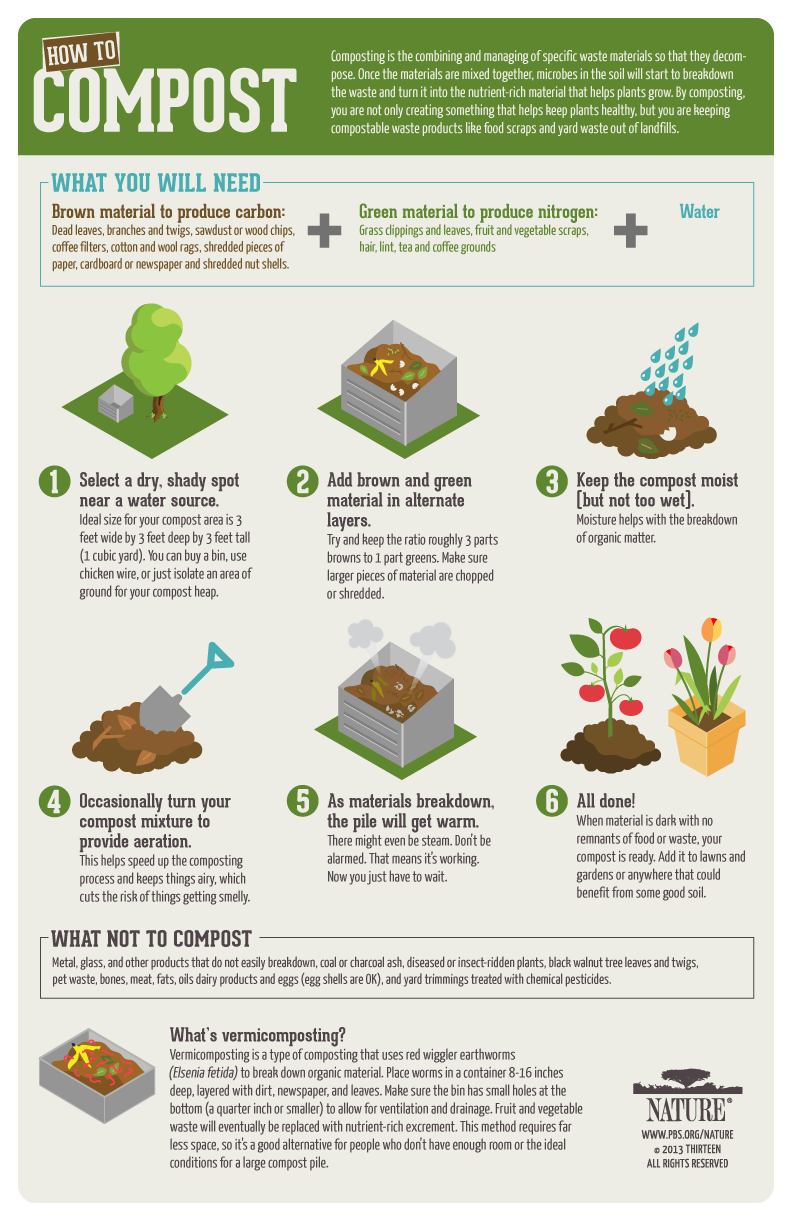
What: This infographic is simple yet appealing and showcases all 3 effective forms of delivery. It is intellectually stimulating because it offers the information in a step by step process with pictures allowing the reader to easily comprehend and take action. It also shows relevancy to the audience by mentioning how compost can help their personal garden in step 6. Lastly, it is creative because at a glance the audience can understand the purpose and what to do but at the same time information is not compromised — everything from how to compost, do’s and don’ts of what should be put in compost, and different types of composting is included.

Gut: The graphic invoked a feeling of practicality allowing taking action to be easy. By showing step to step procedure with few words and pictures, it showcased that composting is not much extra work and is purposeful. The picture in step 6 showcased the usefulness in a glance, making people want to compost. It was pleasing to read, because of the way the infographic was set up – easy terms and not cluttered with words — extra stuff put on the bottom and important things boxed.

So What: Surprisingly, I had never thought that making compost was so easy and never realized the fruitful results it has – such as being able use it as fertilizer in my own garden. I thought it was too much work and never really saw the short-term benefit. This also seems like a financially and environmentally a good option due to being able to save money on fertilizers and recycling organic material. The source is pbs.com/nature. With this source, during class time we could go to this website and find more information on soil/composting and maybe even be able to elaborate on this infographic.

Now What: I think that making the steps of how to compost and what to compost is very important when talking to college students living in Rooker Hall/ECV community because they do not have the time to do research and if it is too complicated — students will not take part in the activity. Students have a lot going on in their day to day so we need to highlight purposeful and relevant information to them when giving them tasks. These things have not really come to light because we are all focusing on the research of composting that we are not looking at the delivery and outcome aspect.

.

Composting Infographic- Idan Kirshenbaum

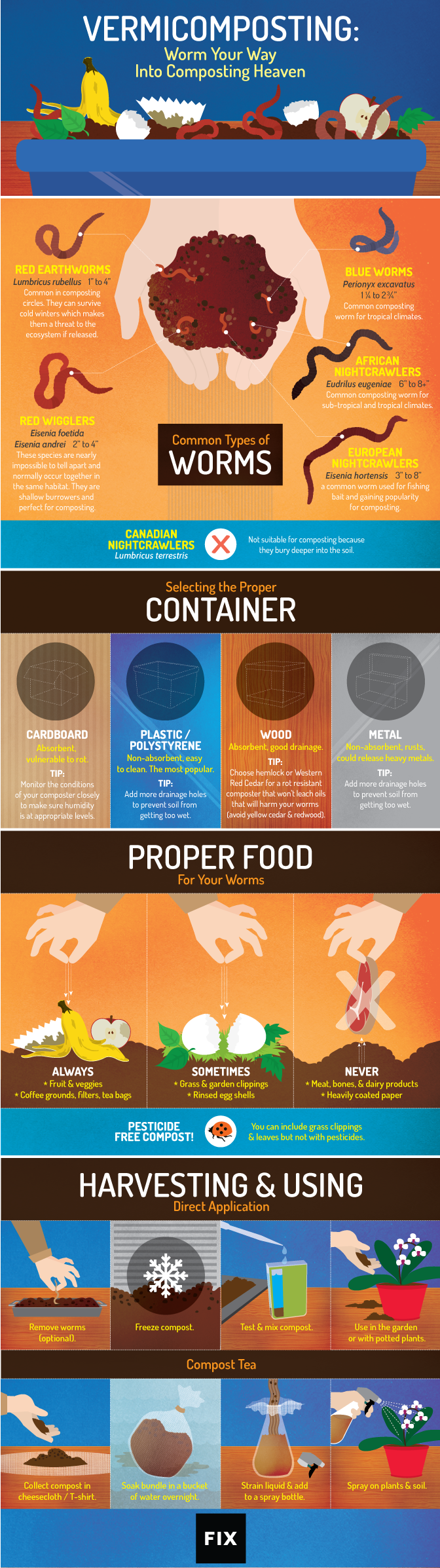
This infographic is intellectually stimulating and extremely informational. It provides information about vermiculture, a process similar to composting, but it uses worms in addition to microbes and bacteria to turn organic waste into a nutrient-rich fertilizer. This graphic includes information about which types of worms to use, proper containing methods, what to feed the worms, and how to use the vermicompost. All the information in this graphic is relevant to vermiculture and presents the information in an organized, creative way for the reader to understand easily. The structure of the material and the simplicity of the vermiculture process described in this graphic surprised me and helped make this graphic very comprehensible. I hadn’t ever thought about how easy it would be to compost in my own home as the process is so simple and is described so well in this infographic. I believe it is essential that us as students help spread the word and teach other on campus that it is almost effortless to compost.

Infographic blog post – Julianna Mallette

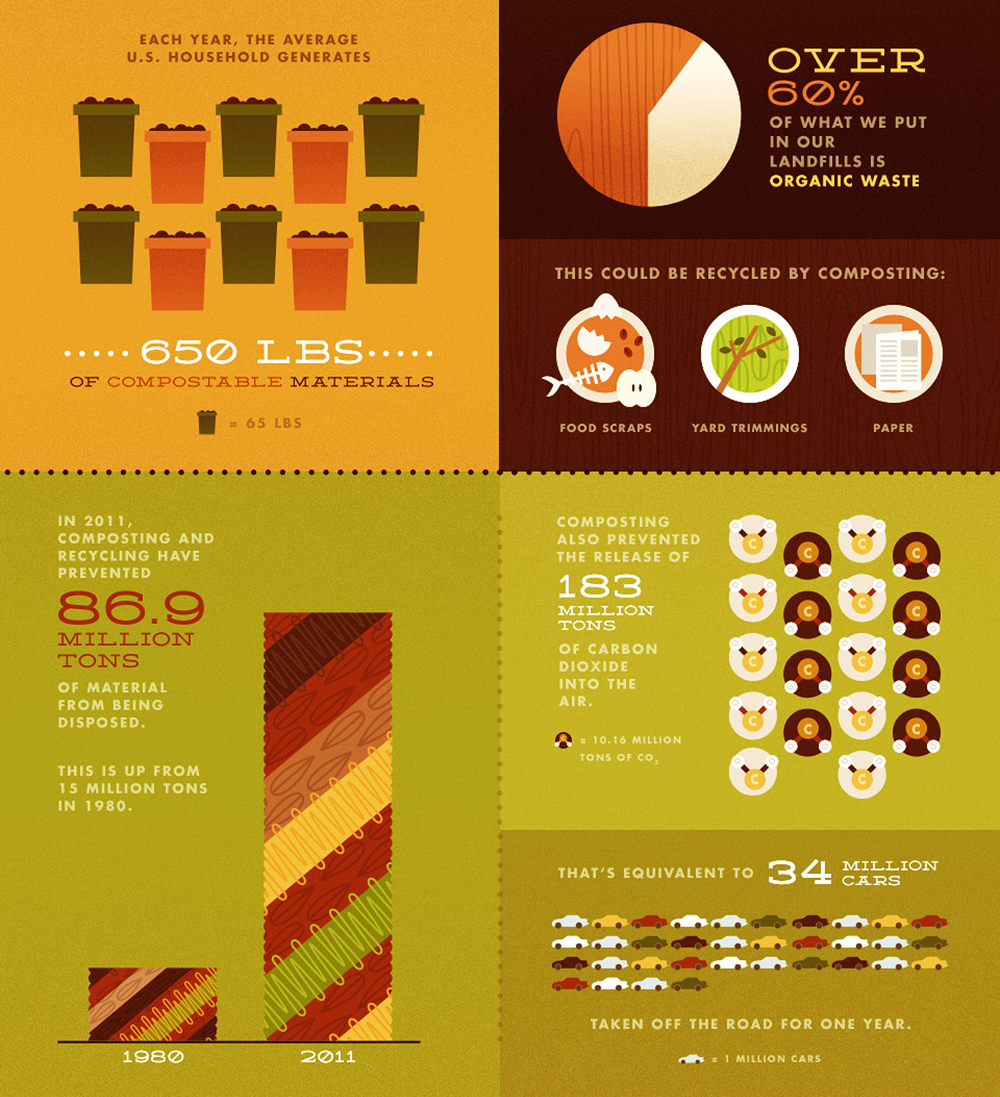
The infographic I have chosen is intellectually stimulating, and gives interesting information and statistics to readers. I find the graphic relevant because it pertains to our future and the U.S. specifically, in terms that people would be familiar with. It is creative, also, in the design and presentation. The infographic is eye catching and colorful.

The graphic gave me hope right off the bat. It shows statistics on composting that I found to be positive, and gaining momentum. It shows that the population is taking a step in the right direction, and we just need to keep trying our best to be mindful and compost. I was pleased when I saw the picture.

I hadn’t thought of the past before. I was always focused on the present. Many infographics do little to give us hope for the future, but instead scare us about what will happen if we don’t improve. This infographic creator was trying to give us insight into how far we have come by composting, and makes it clear that we can achieve improvement, because it’s happening around us all the time. The infographic draws on past years statistics, and this infographic, along with many others, was published online for the media to use and magazines to print. We can trace the data back through past public records about trash and environment.

I think that perhaps the students haven’t considered the total overall impact that long term composting can make. They may know the basics about how it is good for the environment, but do they know about real results that we could be seeing in the future? Maybe they haven’t thought about it because we are so caught up in the present, and how to make our lives easiest. It’s an American way of culture to put yourself first, but maybe it’s time we did more for Mother Nature. I think we can instill hope in our graphic, much like this one does.

Group 2: Creating Compost(Harina and Greg)

Composting is very important because of what it gives back to nature. It enables for healthy plant growth. From our research we found that composting involves: piling up scraps of organic material à monitoring moisture and temperature à then turning the pile to expose all edges. We also have to closely monitor the carbon: nitrogen ratio to maintain 25 – 30 parts carbon to 1 part nitrogen.

Carbon mainly comes from vegetation whereas Nitrogen is created through the little bit of animal product and environment.  In a pile you should always limit the amount of animal product because you don’t want to draw rats and the pile will be sitting there for a long time.

The most important aspects to making compost would be maintaining moisture and temperature. This is done by turning the pile. This is also affected by the weather outside.